
Colorado River Guide Blog
Bass Pro Shops’ Johnny Morris Gives $650,000 – Lake Havasu
ATHENS, Texas–Bass Pro Shops founder Johnny Morris presented a check for $650,000 to the Texas Freshwater Fisheries Center at a banquet in Grapevine April 16.
The gift was Morris’ way of expediting the construction of a new education building at TFFC. He pledged at an April 3, 2004, banquet to match dollar-for-dollar, up to $650,000, funds raised by April 16, 2005, by Schooling for Bass, a Dallas support group headed by Richard (“Dick”) Hart. The volunteer group responded by raising $711,000.
Morris made the presentation accompanied by Bass Pro Shops staff and friends. “This check isn’t from one person; it comes from a lot of people,” Morris said. “It comes from the people at Bass Pro Shops. It comes from our customers. And it comes with a tremendous amount of gratitude to Schooling for Bass members, TFFC staff, Texas Parks and Wildlife Department executive director Robert Cook and to all of the incredible people who are a part of Texas Parks and Wildlife. The fishermen and women and future generations of fishermen not only of this state but of our nation are deeply grateful to you for your visionary leadership and incredible support of the sport of fishing.”
Bass Pro Shops has a long association with Texas Parks and Wildlife Department. In November 1986, Mark Stevenson caught a new state record largemouth bass, which also became the first entry into what is now the Budweiser ShareLunker program. Stevenson named the bass Ethel, and that fish later was given to Bass Pro Shops and was displayed at the company’s headquarters in Springfield, Mo. The check Morris presented to TFFC was inscribed “In memory of Ethel.”
In accepting the donation, TPWD Executive Director Robert L. Cook said, “Texas Parks and Wildlife Department depends on partnerships to accomplish its goals. This is truly a win/win situation. We thank all the Schooling for Bass members and Bass Pro Shops so much.”
Other organizations and individuals contributing to the building fund were Kathie and Ed Cox Jr., Eric Kincaid, ExxonMobil Foundation, Cain Foundation, Ginger Murchison Foundation, Hillcrest Foundation, Sheila and Walter Umphrey, Friona Industries, Hoblitzelle Foundation, Cathey and Don Humphreys, Texas Game Warden Association and J.B. Katz Foundation.
Also attending the banquet were Joseph Fitzsimons, chairman of the Texas Parks and Wildlife Commission, Commissioner Philip Montgomery, Inland Fisheries Division Director Phil Durocher and former TPWD Executive Director Andrew Sansom.
TFFC director Allen Forshage noted, “With completion of this new $1.5 million educational facility, TFFC will have an outdoor education center unmatched in North America.”
The Edwin L. Cox Jr., Texas Freshwater Fisheries Center in Athens combines visitation and outdoor education with a production fish hatchery. TFFC is a facility of the Inland Fisheries Division of the Texas Parks and Wildlife Department, the state agency charged with the management and conservation of the natural and cultural resources of Texas. TPWD also works to provide hunting, fishing and outdoor recreation opportunities for the use and enjoyment of present and future generations.
Built as a joint venture between TPWD, the Texas Parks and Wildlife Foundation, Inc., and the community of Athens, TFFC includes a wetlands trail and over 300,000 gallons of indoor and outdoor aquariums displaying dozens of species of native fish, waterfowl, alligators and amphibians in recreated habitats.
TFFC invites both individual and group visitation. Reservations are recommended for groups of 10 or more. Admission is charged. Public hours are 9a.m. to 4 p.m. Tuesday through Saturday and 1-4 p.m. Sunday.
Bass Pro Shops, also a major catalog and internet retailer, has 27 destination retail locations across America and Canada. – Lake Havasu
Budweiser Sharelunker Program Has Biggest Year in a Decade – Lake Havasu
ATHENS, Texas–The Budweiser ShareLunker 2004-2005 season closed April 30 with 24 fish entered, the highest total since 1996.
A large measure of credit for this year’s performance goes to Lake Alan Henry. The 2,880-acre lake southeast of Lubbock produced nine ShareLunkers, largemouth bass weighing 13 pounds or more. Lake Fork contributed seven, Sam Rayburn Reservoir two, and Lakes Falcon, Ray Roberts, Austin and Choke Canyon one each. Two lunkers came from private waters.
Nine of the fish spawned. Genetic testing showed that six of the big females were pure Florida largemouth bass. They produced 101,000 fry. Most of the fingerlings produced from these fry will be stocked into lakes which produced this year’s ShareLunkers. In addition, 20,000 will be reared to 6 inches and used for growth research studies.
Three females classified as intergrades (crosses between Florida largemouth bass and northern largemouth bass) spawned and produced 70,000 fry that will also be stocked into public waters.
The 171,000 fry are the most produced in one year since the Texas Freshwater Fisheries Center opened.
Budweiser ShareLunker program manager David Campbell expects to have most of the donated fish returned to their lakes of origin by mid-May.
Details on the fish entered into the program this year follow, in chronological order.
Oct. 29. Danny P. McBride of Hatchett, Ark., landed a 13.16-pound largemouth bass that became the season’s first entry into the Budweiser ShareLunker program. McBride’s fish was the first ShareLunker from Lake Fork caught in the month of October and only the fifth October fish entered into the program since its inception in 1986.
McBride hooked the big fish in 12 feet of water while using a Carolina rig. The fish was 25 inches long and measured 21 inches around.
Dec. 2. Scott Farmer of Yantis pulled the season’s second Budweiser ShareLunker from Lake Fork. The 13.6-pound largemouth had a girth of 21.5 inches and was 24.5 inches long.
Farmer caught the big fish at a depth of 32 feet in the middle of the lake. It bit on a black jig.
Dec. 4. Falcon Reservoir produced its first Budweiser ShareLunker in nine years, when San Antonio resident Jerry Campos pulled a 14.28-pound largemouth from the lake.
The Campos fish was caught in 5 feet of water on a soft plastic bait. The fish was 26 inches long and 21.5 inches around.
As the Texas resident catching the largest fish of the season, Campos will be honored as Budweiser ShareLunker Angler of the Year at the annual banquet scheduled for May 28 in Athens. In addition to receiving a fiberglass replica of his fish made by Lake Fork Taxidermy and a ShareLunker jacket and cap, Campos will be awarded a lifetime fishing license.
Jan. 29. Rickey D. Williams of Lubbock kicked off a record-setting weekend for Lake Alan Henry when he hooked ShareLunker No. 4, a 13.14-pound fish, on a spinner bait in 8 feet of water shortly before noon. The 26-inch-long fish had a girth of 20 inches.
Jan. 29. Later that day Ben J. Kirkpatrick of Wolfforth went 40 feet deep with a black and blue jig to hook a 13.48-pounder that stretched 25 inches long and 22 inches around. It was the second fish of the day from Lake Alan Henry.
Jan. 30. Lake Alan Henry stayed hot. Kevin Ray Phillips of Sundown caught a 13.45-pounder in 6 feet of water up the river on a Norman DD-14 in Tennessee shad pattern. The fish was 25.5 inches long and 20.625 inches around.
Jan. 30. The fourth fish from Lake Alan Henry in two days just barely made the cut at 13 pounds even, but it marked the first time in the 19-year history of the Budweiser ShareLunker program that four entries were caught from the same lake in a two-day period.
Fishing the main lake in 6 feet of water, Lubbock resident Coy Callison used a chartreuse Norman DD-22 to pull in the 25.25-inch-long, 20.25-inch girth fish.
Feb. 12. Jim Lee of Winnsboro caught ShareLunker No. 8, a 13.91-pound largemouth, from a 55-acre private lake in Wood County. The fish measured 25.5 inches long and 22.125 inches around. Lee was using a 1/8-ounce Bass Assassin jighead with a white Team Luck E Strike three-inch curly-tail grub.
Feb. 19. Andrew Elder, a sixteen-year-old from Deville, Louisiana, caught Budweiser ShareLunker No. 9 from Lake Fork.
Deville was fishing in 3 to 4 feet of water in Pension Creek when a 13.67-pound largemouth hit his crawfish Rat-L-Trap. The fish was 25 inches long and 22.125 inches around.
March 3. Derrell Maltsberger of Denton caught a 13.19-pound largemouth from Lake Fork about 2:15 p.m.
Maltsberger pulled the fish from 9 feet of water near the dam. The fish was 24.75 inches long and 22 inches in girth.
Lakes Fork and Alan Henry were now tied for the season lead with four ShareLunkers each, but the battle was just beginning.
March 5. Mark A. LeBlanc of Orange caught a 13.59-pound lunker from Sam Rayburn Reservoir on March 5. It was 25.5 inches long and 21 inches around.
Le Blanc was fishing in 5 feet of water with a Senko plastic bait in a watermelon red/green flake pattern.
The Le Blanc fish was the first ShareLunker caught from Sam Rayburn since 2002 and only the third since 1998, when it produced six ShareLunkers. That lake has contributed a total of 22 fish to the Budweiser ShareLunker program.
March 6. Roger Frazier Jr., of The Colony was fishing Ray Roberts Lake when he caught a 13.9-pound fish measuring 25.5 inches long and 20.75 inches around.
Frazier’s fish hit a fluke in 2 feet of water in the north end of Ray Roberts. The fish was the first ShareLunker taken from Ray Roberts since 2000 and only the fourth in that lake’s history.
March 10. Mike Modisett of Lubbock caught ShareLunker No. 13 from Lake Alan Henry on March 10. The 13.82-pound fish bit a bass minnow in 15 feet of water under a crappie house. It measured 25.75 inches long and 20 inches in girth.
The fish was the tenth to be entered in the Budweiser ShareLunker program from Lake Alan Henry and the fifth to be caught from the lake this season.
March 11. Lake Fork contributed its fifth fish of the season when Art Price of Crowley hooked a 13.25-pounder while fishing a black and blue jig with Zoom trailer in 9 feet of water on the side of a point. The fish was 26 inches long and 21.5 inches in girth.
March 12. Far to the south of those lakes, Dwayne Kinley of Austin pulled a 13.07-pound largemouth from 4 feet of water in Lake Austin. Kinley was fishing a secondary point using a Brush Hog. The fish was 26.25 inches long and 20 inches around.
Kinley’s fish was the sixth to be entered into the program from Lake Austin.
March 12. At about the same time Kinley caught his fish, George Shaw of San Antonio was battling a 13.26-pounder on Choke Canyon Reservoir. Shaw was fishing in 8 to 9 feet of water when the big bass bit a watermelon red Brush Hog. The fish was 24.75 inches long and 20.25 inches in girth. Shaw’s fish is only the fourth to be entered into the Budweiser ShareLunker program from Choke Canyon.
March 20. Douglas Garland of College Station landed the second-largest fish of the 2004-2005 season, a 14.12-pound largemouth, from a private lake in Wood County. The big bass was 26.5 inches long and 21.75 inches around.
Garland was using a Stanley spinner bait in 5 to 6 feet of water.
March 20. Gary Boyles of Lubbock caught the sixth Budweiser ShareLunker of the year from Lake Alan Henry on March 20. The 13.61-pound bass was 25.25 inches long and 21 inches in girth.
Boyles was fishing in 12 feet of water in Grape Creek with a Berkley Power Worm.
March 28. Guide David Strahan of Alba put Lake Fork into a tie with Lake Alan Henry when he brought in Lake Fork’s sixth Budweiser ShareLunker of the season, a13.05-pound fish that was 24.75 inches long and 21.25 inches around.
Strahan caught the fish in 5 feet of open water using a white lizard on a beautiful sunshine-drenched morning.
March 30. Mark Gibertini of Albuquerque, New Mexico, caught the season’s seventh ShareLunker from Lake Alan Henry, a 13.68-pound largemouth that stretched 26.25 inches long and 20.75 inches around.
Gibertini was fishing in 4 feet of water in the Big Grape area when the fish bit a waterdog.
March 31. Lake Fork pulled back into a tie with Lake Alan Henry for most fish entered into the Budweiser ShareLunker program during the current season.
David Meeks of Texarkana pulled a 13.03-pound bass from 2 feet of water in Wright Creek. The fish bit on a watermelon Senko. The big bass was 24.25 inches long and 21.75 inches around.
April 14. Lakes Alan Henry and Fork continued their see-saw battle to produce the most ShareLunkers during the current season. Jimmy McMahon of Big Spring entered the eighth Budweiser ShareLunker of the season from Lake Alan Henry.
McMahon was fishing in 3 feet of water using a Mad Man White Craw when he hooked the 13.03-pound fish. It measured 26 inches long and 20.5 inches in girth.
April 15. Lake Alan Henry tightened its grip on first place in the race to produce the most ShareLunkers this year.
Matthew Kent Jolly of Lubbock caught the ninth ShareLunker of the year from the lake, a 13-pound fish boated about 2:30 p.m. from 6 feet of water on the south side of Gobbler Creek. Matthew’s
father hooked the fish first, but she tangled the line in a tree and got off. Matthew hooked and landed the 25-inch-long, 20-inch-girth fish a few minutes later.
April 20. Nick Brinlee of Longview caught the final Budweiser ShareLunker of the 2004-2005 season from Sam Rayburn Reservoir on April 20.
Brinlee was fishing a grass bed in 8 feet of water when the 13.36-pound largemouth took a pumpkinseed worm on a Carolina rig. The fish was 26.5 inches long and 21 inches around.
A total of 391 fish have been entered into the program since its inception in the fall of 1986. Of those, 376 * were caught from 52 bodies of public water. The remaining 15 ** were caught from private lakes.
This season marked the first time in the 19-year history of the Budweiser ShareLunker program that Lake Fork did not produce as many or more lunkers than any other lake in Texas. Sam Rayburn Reservoir and Lake Fork each produced six ShareLunkers in 1998. – Lake Havasu
Two New State Records Raise Bar for Junior Anglers – Lake Havasu
AUSTIN, Texas – With classes letting out for the summer, many young Texans will turn their attention to schools of a different sort: fish. Some will make the grade by adding their name to the state angling record books.
And, for young anglers hoping to score on two of the state’s most popular game fish species –largemouth bass and spotted seatrout – the bar just got raised. Both records were eclipsed in late April with impressive catches.
The new largemouth bass record for junior anglers is an 11.57-pound brute caught on Sam Rayburn Reservoir April 23 by 11-year-old Brandon Adams of Florence, Texas. The fish measured more than 28 inches in length. After a quick photo session, Brandon released his record catch back into the lake.
A week later, 10-year-old Matthew Claude Johnson of Caldwell, Texas, reeled in a prized 30-inch trout on Matagorda Bay that weighed 9 pounds.
Both fish have been certified in the Texas Parks and Wildlife Department’s Angler Recognition Awards program for state and water body fish records.
“Trophy fish like these new records would be a prize for any angler, and these recent catches demonstrate the level of skill possessed by our younger fishermen,” said Joedy Gray, Angler Recognition Awards program coordinator at TPWD. “There are still plenty of water bodies without records, so the opportunity to get your name in the books is out there. For example, each bay system represents a separate water body and when you consider how many coastal fish species there are, the record books are wide open.”
The Junior Angler Recognition Program is open to kids 16 and younger and the same rules for entry in the Angler Recognition Awards program apply for the juniors. Fish can be entered in the following categories.
State Records for Public Waters
* Rod & Reel – recognition for catching the largest fish of a species from Texas public waters by rod & reel fishing.
* Fly Fishing – recognition for catching the largest fish of a species from Texas public waters by fly fishing methods using artificial lures.
* Unrestricted – recognition for catching the largest fish of a species from Texas public waters by any legal method other than rod & reel.
* Bow Fishing – recognition for catching the largest fish of a species from Texas public waters by bow fishing.
State Records for Private Waters
* Rod & Reel – recognition for catching the largest fish of a species from Texas private waters by rod & reel.
* Fly Fishing – recognition for catching the largest fish of a species from Texas private waters by fly fishing methods using artificial lures.
* Bow Fishing – recognition for catching the largest fish of a species from Texas private waters by bow fishing.
* Water Body Records –Records for individual locations (reservoirs, rivers, bays, etc.) are also maintained.
* All Tackle – recognition for catching the largest fish of a species from a particular Texas public water body using any legal method.
* Rod & Reel – recognition for catching the largest fish of a species from a particular Texas public water body by rod & reel.
* Fly Fishing – recognition for catching the largest fish of a species from a particular Texas public water body by fly fishing methods using artificial lures.
* Bow Fishing – recognition for catching the largest fish of a species from a particular Texas public water body by bow fishing.
* Big Fish Award – for catching a trophy class fish of selected species.
* Catch and Release Award – for the catch and live release of a trophy class fish of selected species.
There are also categories for the first fish caught by an angler of any age and for a catch that does not meet the requirements of other award programs but still deserves recognition.
Consideration for all state and water body records, except first fish awards, must include the fish’s weight on certified scales. Certified scales are scales (either electronic or spring-based) that have been certified as accurate by the Texas Department of Agriculture, the International Game Fish Association (which certifies handheld scales) or a commercial scales calibration company. Feed stores, fertilizer plants, and scales calibration companies are good sources.
Record fish must be weighed on certified scales within three days of the catch, although weights on non-certified scales will be considered providing the scales are certified within 30 days. Applications must be received within 60 days of the catch date and a notary witness is required for State Record applications.
For more information contact: Junior Angler Recognition Awards Program, Attn: Joedy Gray-IF, Texas Parks and Wildlife Department, 4200 Smith School Road, Austin TX 78744; e-mail: joedy.gray@tpwd.state.tx.us or phone (512) 389-8037. – Lake
Havasu
Falcon Reservoir Primed To Reclaim Bass Reputation – Lake Havasu
ZAPATA, Texas —Texas Parks and Wildlife Department biologists are excited over the prospects for Falcon Reservoir. A decade ago Falcon Reservoir offered some of the best bass fishing in Texas and was a very popular destination for bass tournament anglers. Then came a 10-year drought that pulled water levels down and led to a decline in bass fishing.
Beginning in fall 2003, heavy rains in the Rio Grande watershed brought drought conditions to an end. Falcon’s water level dramatically increased, from 45 feet low in June 2003 to nearly full in summer 2004. The reservoir size swelled to about 60,000 acres. When the lake level rose, water inundated thousands of acres of brush, providing ideal habitat for young fish.
Recent TPWD surveys and fishing success at the reservoir indicate that largemouth bass are making a speedy recovery.
Results of a March 2005 bass tournament showed that Falcon is well on its way to reclaiming its reputation as a top bass fishing lake. Of the 147 teams participating, 107 brought 5-fish limits to the weigh-in with the average weight of the fish being 2.9 pounds. It took a 5-fish limit of 28.96 pounds to take first place and a fish weighing 10.6 pounds to collect the big bass award.
A TPWD Inland Fisheries electrofishing survey of Falcon in April 2005 showed a very abundant population of 7 to 12 inch largemouth bass. These fish, spawned in 2004 and 2005, experienced exceptional survival because of all the cover in the reservoir. These young bass are also growing very rapidly and should make for plenty of quality size fish to catch in years to come. Fish hatched in 2004 already average 10 inches long and should reach the 14-inch minimum length limit by spring 2006.
TPWD biologists recognized that the improved habitat conditions in Falcon would yield high stocking success, so a record number of largemouth bass were stocked in 2004 to boost natural production and improve the genetics of the population. Both Florida and northern largemouth fish were stocked. Most of the 840,000 fish were about an inch long.
In December 2004, Falcon produced its first entry into TPWD’s Budweiser ShareLunker program in nine years. This fish, caught by San Antonio resident Jerry Campos, weighed 14.28 pounds and was the largest of 24 fish entered into the program during the 2004-05 season. Some 12,000 ShareLunker offspring produced at the Texas Freshwater Fisheries Center in Athens were stocked into Falcon in May 2005.
Falcon Reservoir is located about three hours south of San Antonio. Although it is a long drive from most metropolitan areas in the state, Falcon is worth the trip considering the world-class largemouth bass fishing it will offer in the next few years.
Hotels, restaurants, tackle shops and boat launching can be found in the city of Zapata, which is located adjacent to the reservoir. Falcon Lake State Park (956) 848-5327, located near the dam, has campsites with electricity and water and a three-lane concrete boat ramp. More information about Falcon Reservoir can be obtained by contacting the Zapata County Chamber of Commerce (800) 292-5253 or www.zapatausa.com or by calling TPWD’s San Antonio Inland Fisheries office (210) 348-6355. – Lake Havasu
State Parks Lure Anglers During Family Fishing Celebration – Lake Havasu
AUSTIN, Texas — Lazy summer days and fishing just seem to go hand in hand, so it’s the perfect time to take advantage of the Family Fishing Celebration that allows fishing without a fishing license in Texas state parks.
The Family Fishing Celebration was launched to encourage families and others to fish at more than 70 state parks without having to purchase a fishing license and required stamps.
Houston postal workers B. E. Lewis and K. R. Colwell were found taking advantage of the Family Fishing Celebration on a recent spring morning by doing some bank fishing at Fort Boggy State Park near Centerville. They said they appreciate not having to have a fishing license and stamps to try their luck at reeling in some bluegills from the park’s 15-acre lake.
“We like having the lake all to ourselves this morning,” Lewis said. “On our days off, we come up here several times a year just to fish and relax.”
Academy Sports & Outdoors is the exclusive retail sponsor of this year’s promotion that runs through Labor Day. In addition to providing funding, Academy has provided state parks with bobbers and kids’ fishing starter kits that will be given away as prizes at Family Fishing Celebration events held this summer at several Texas state parks.
A number of state parks across Texas will be holding special FFC events on June 4. They are: Cooper Lake’s South Sulphur Unit (Sulphur Springs), Eisenhower (Denison), LakeArrowhead (Wichita Falls), Lake Whitney (Whitney), Martin Dies, Jr., (Jasper), McKinney Falls (Austin), Purtis Creek (Eustace), Sabine Pass Battleground (Sabine Pass) and Tyler (Tyler).
A complete list of state parks offering fishing opportunities and dates of upcoming FFC events and seminars can be found on the TPWD Web site or by calling (800) 792-1112.
The FFC’s license-free angling in Texas state parks applies only to bank and pier fishing, and to boat fishing in bodies of water totally contained within the boundaries of a state park, such as Lake Raven in Huntsville State Park and Park Lake in Buescher State Park. The fishing license waiver does not apply to anglers who launch boats from state park property to access an adjacent lake or other water body because it does not apply outside state park boundaries. – Lake Havasu
Boaters: Turn Off Engine While Idling To Save Lives – Lake Havasu
and boat operation. Not wearing a life jacket. Going out in bad
weather. However, game wardens are running into boaters who are
overcome by a silent, invisible threat: carbon monoxide.
Memorial Day Weekend Game Wardens were patrolling in Devils Cove on
Lake Travis when they responded to an emergency medical call of a
female not breathing on board a vessel. The 18-year-old had been
overcome with carbon monoxide from the back of a vessel, according to
medical personnel. She had fallen off the back of the boat from the
deck without a life jacket on, unconscious. Fortunately, other boat
occupants pulled her out of the water. She responded to oxygen and was
taken to the hospital.
“People want to sit back there and drink and hang out,” said Game
Warden Capt. Robert Goodrich. “But those fumes are boiling up back
there and it’s unsafe to be back there with the engine idling.”
Carbon Monoxide is odorless but fuel is not. But by the time the
smell of fuel becomes strong, it may be too late as far as how much
carbon monoxide has been inhaled.
“Boat operators just don’t realize what’s doing on back there,” said
Goodrich, who’s responded to two other calls like this earlier in the
spring and one last year.
“This young lady was lucky, she ended up okay, but she did not have
a life jacket on. This very well could have been a fatality.”
A few years ago on a private ski lake in Ellis County, another
teenage girl was not so fortunate. She was lying on the back deck of a
ski boat and was over come with carbon monoxide and died.
Carbon monoxide can imperil boaters as well as people at home. Since
1990, carbon monoxide has killed at least 93 people while they were
boating and sickened nearly 400 others, according to federal safety
investigators quote in a Consumer Reports article. The
poisonings affected people inside and outside boats, when boats were
moored and even when under way. The poisonings can happen in the
following circumstances: when passengers hang onto the rear of the boat
and allow themselves to be pulled through the water until the boat’s
wake builds enough to allow body surfing. “Teak surfing,” as it’s
called, puts passengers close to the engine exhaust; when passengers
ride on or swim beneath a platform near the exhaust; when leaky seals
between decks, bulkheads, and the hull or a faulty or poorly maintained
exhaust system allows carbon monoxide to build up inside the cabin;
when boats are moored close together and one has an engine running; or
when the “station wagon effect” generates air currents that pull
exhaust gas into the cabin, much as auto exhaust enters through an open
rear hatch.
Preventative measures:
- Keep the boat’s exhaust system in good repair.
- Turn off engine anytime the boat is idling and there is no air to pull the fumes away.
- Have a marine-grade carbon monoxide detector on board.
- Don’t let passengers teak surf, and keep passengers off the swim platform when the engine or generator is running.
– Lake Havasu
Dick Davis Named Executive Director of Texas Parks & Wildlife Foundation – Lake Havasu
DALLAS – Dick Davis, a veteran conservation journalist who spent the
last five years as Director of the Texas – Oklahoma Region for the
National Fish and Wildlife Foundation, has been named executive
director of the Texas Parks & Wildlife Foundation, effective June 1.
Davis and a current staff of three based in Dallas, will lead
efforts to provide private support for the work of the Texas Parks
& Wildlife Department, for which the foundation is the official
non-profit partner.
“We’re delighted that Dick has come on board,” said Pat Oles,
Chairman of the TPWF board. “We’ve been very impressed with his record
over many years of conservation efforts and in non-profit work. “We
think that he’ll be a great fit for our foundation and will be a great
leader in helping us achieve our potential.”
Davis began his journalistic work on behalf of conservation when
still a high school student in Duncanville by writing articles for the
Dallas Morning News outdoor page. He later served as sports
writer-photographer for the Waco Tribune-Herald, where an article about
his personal tryout with the Dallas Cowboys was named “Best Feature
Story” by the Texas Sports Writers’ Association. In 1975 he began to
publish in such magazines as Outdoor Life, Gray’s Sporting Journal,
Southern Outdoors and Game & Fish Publications.
His award-winning series, “Outdoor Magazine,” first appeared on 150
public television stations, then later on cable. It was three times
named “Best Television Production” by the Outdoor Writers’ Association
of America. The series also won the Theodore Roosevelt Award for
Conservation from the National Outdoor-Travel Film Festival.
While living in Louisiana serving as Outdoor Editor for a major
daily newspaper, his articles won Best News Story, Feature and Column
by the Louisiana Press Association. He also helped found the Louisiana
Chapter of the National Wild Turkey Federation. And, he was
instrumental in the establishment of the Tensas River National Wildlife
Refuge.
“Everything I’ve done in my career, from writing about natural
resource management for newspapers and magazines to producing
television programs to working for other non-profit organizations, has
prepared me for this job,” Davis said. “The people who work for the
Texas Parks and Wildlife Department have always been among my heroes.
Now to be able to assist them and the department in accomplishing their
conservation goals on behalf of the people of Texas is both an honor
and dream come true.”
During his five years with the National Fish and Wildlife
Foundation, he helped increase the number of grants to Texas
organizations from about 8 to about 30 annually and the average federal
and private investment rose from $300,000 to $1.5 million a year. He
also established the Texas Legends Award recognizing individuals for
life-long conservation accomplishments. Recipients have been Tobin
Armstrong, Karen & Tim Hixon and Dick Bartlett, all supporters of
the TPWF.
“The Texas Parks & Wildlife Foundation has a rich history, from
the outstanding conservationists who have served on its board to the
hundreds of supporters who have contributed to its many efforts and
special projects,” said Davis. “One of my short-term goals will be to
visit with as many of those folks as soon as possible to enlist their
continuing support, engage them again in our work and to invite and
incorporate their suggestions on how to make the foundation stronger in
the future.
“At the same time, we will reach out to new people who may have
never supported ours or any other conservation organization, invite
them to join our team and help ensure the permanent protection and
management of Texas’ unique natural resources.”
– Lake Havasu
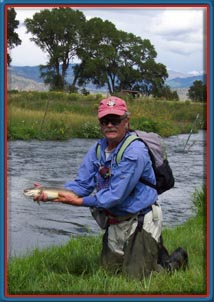
New Mexico Fly Fishing Report Summer 2005 – Lake Havasu
is winding down on most area streams and fishing this summer should be
better than the past few drought plagued seasons. The Stonefly Hatch is
in progress on the Cimarron and fishing has been excellent on the lower
reaches of the river as they haven’t been releasing a significant
amount of water from the dam. The Cimarroncita has been especially good
with # 12 Stimulators. We have been fishing on the Costilla also and it
looks like the fish are in good shape there also. We have a new piece
of private water on the lower river near Amalia.
 The Valle Vidal opens
on July 1st and there is plenty of water in the resevoir this year so
flows should be decent. The Red and the Embudo are still running high
but are clearing and should be great by late June. The Conejos probably
won’t be fishing till late June as they usually have a more intense,
long lasting runoff (Its running 1300cfs on the lower river now). We
have access thru Conejos River Anglers to a couple of private leases
including the Hamilton Lease on the upper river and a new one down by
Broyles Bridge. Culebra Creek is starting to clear and Rita had a good
day up there yesterday with a couple of guys from Amarillo.
fly fishing camps on the Cimarroncita Ranch that will include expert
instruction in all levels of fly fishing, lodging and access to the
“Dream Water” on the Cita. Myself, Rita and Doc Thompson will be the
instructors/guides. For details visit the Cita’s website at cimrroncita.com
– Lake Havasu
Lake Lewisville Gives Up Record Largemouth to Pro Angler – Lake Havasu
11-pound, 13-ounce fish starts VanDam on road to victory
ATHENS, Texas — Professional angler Kevin VanDam of Kalamazoo, Michigan, has a new love: Texas bass fishing.
Fishing Lake Lewisville on the first day of the Bassmaster Elite 50
tournament June 1, VanDam hauled in a new lake record largemouth bass
that was also the biggest fish he’s ever caught in competition.
“I love Texas!” VanDam said at the weigh-in. “The state absolutely
has the best fishing in the country, and I just love this fishery.”
VanDam went on to win the four-day event, vaulted to the top of the Elite 50 standings and pocketed a total of $106,000.
He also took home a Texas Parks and Wildlife Department lake record
largemouth bass certificate, which was presented at the Friday weigh-in
by Inland Fisheries district biologist Rafe Brock. “It’s good to see
that the best anglers in the world have enjoyed Lake Lewisville so much
this week, and the record bass just shows what an excellent fishery we
have here,” Brock said.
Further evidence of the quality of the fishery was the total catch
for each day. On Day One, 41 of the 50 anglers brought in five-fish
limits. The 233 fish weighed 528 pounds, 7 ounces. On Day Two there
were 38 limits totaling 219 fish and 457 pounds, 1 ounce. The field was
cut to 12 anglers on Day Three, and they produced two limits and 34
fish weighing 68 pounds, 13 ounces. On the final day of competition,
VanDam brought in the only limit among the six anglers left, who
brought in a total of 12 fish weighing 22 pounds, 10 ounces.
Lake Lewisville has been largely overlooked until now, said pro
angler Alton Jones of Waco, but it has much to offer. “We have a lot of
fisheries in North Central Texas that don’t get any publicity because
of lakes like Fork, Sam Rayburn and Ray Roberts,” he said. “This lake
has lots of rock piles, and along the shoreline you’ll find some
flooded willows. It’s got a lot of targets to throw at in the form of
stumps, boat docks and rock shorelines. There’s some good cover to
fish; you’ve just got to find it.”
And thanks to VanDam, anglers know there’s at least one 11-pound, 13-ounce monster to be found out there.
– Lake Havasu
FREE BAITS FOR 5 DAYS ONLY! – Lake Havasu
Store for ANY items, in the next 5 days, will receive 2 packs of “FREE”
Kid Lizard plastics, a “FREE PACK” of YAMAMOTO, and a “FREE PACK” of
Netbaits “ACTION CAT”. LIMITED OFFER, so hurry. You will never get an
offer like this anywhere. Just email me a copy of your order dated
between 6/18/05 and 6/23/05 and I will mail it out right away.
1-302-764-1788
– Lake Havasu
Recent Legislation Affects Texas Wildlife, Parks – Lake Havasu
oyster and Gulf of Mexico shrimp fisheries, changes in game bird stamps
hunters are required to buy, creation of an all-terrain vehicle trail
program and new or clarified enforcement powers for game wardens are
among the outcomes of bills passed by the 79th Texas Legislature.
– Lake Havasu
Texas Wetlands Project Receives National Award – Lake Havasu
ecologically important wetlands in the Delehide Cove area of West
Galveston Bay will receive one of two National Wetland Conservation
Awards to be bestowed this year at a June 30 ceremony in Washington,
D.C.
– Lake Havasu
Junior Boater Program Teaches Young Kids Water Safety – Lake Havasu
Wildlife Department water and boater safety program reaches more than
10,000 children per year.
– Lake Havasu
TPWD Stocks 4.6 Million Striped Bass Into Texas Lakes – Lake Havasu
ATHENS, Texas — Texas Parks and Wildlife Department has just completed a successful striped bass spawning and stocking season.
TPWD Inland Fisheries Division personnel produced and stocked 4.6
million striped bass and hybrid striped bass fingerlings into 42 lakes.
An additional 2.6 million striped bass and hybrid striped bass fry were
stocked into three lakes.
– Lake Havasu
‘TUF’ Fishing in Texas – Lake Havasu
years as Texas Parks and Wildlife Department ramps up its Texas Urban
Fishing (TUF) program in small lakes located in urban areas throughout
the state.
– Lake Havasu
Lubbock-Area 11-Year-Old Lands Junior Record Largemouth – Lake Havasu
Kenny Schuette, 11, of Slaton, southwest of Lubbock has been verified
as a new junior state record by the Texas Parks and Wildlife Department.
– Lake Havasu
How To Avoid Pitfalls When Buying Used Boats – Lake Havasu
sloppier, with more and more people not getting titles, some sellers
altering sale prices on transfer documents to avoid higher taxes and
others who are inadvertently purchasing stolen crafts. So game wardens
want to advise people to treat the buying or selling of a boat like
they would that of an automobile.
– Lake Havasu
Frequently Asked Questions About Boating Laws – Lake Havasu
Frequently Asked Questions About Boating Laws
– Lake Havasu
Penn 175 Baitcasting Reel – Lake Havasu

Truly our best selling reel ever. Made by Master this
roddy 175 to compete with every baitcasting reel on the market. True
one piece aluminum frame. Reel was made to the highest precision using
CNC machinery. Great for heavy freshwater and light to medium saltwater
baitcasting applications. Fluke, flounder, sea trout, schoolie
stripers, bluefish and otehr inshore gamefish LOOK OUT!
Features:
• Large line guide
• 5 ball bearings
• One piece aluminum body
• Instant anti-reverse one way roller bearing
• Aluminum spool
– Lake Havasu
Fishing in Iraq – Lake Havasu

This is the real story of what a little support from home means to the
troops. I came to Iraq about 15 months ago and things were pretty hot,
mortars and rockets were pretty much a nightly thing and you didn’t get
much of a break from the war. The Camp I’m working out of is right on
the edge of Baghdad and surrounded by man made lakes on one of Saddam
Hussein’s many Palace complexes. Here in Middle East, water is precious
commodity and controlling it a sign of wealth and power. That’s the
reason all of his palaces were surrounded with lakes, especially right
in this area. When dignitaries or others would fly into Baghdad
International Airport he wanted the lakes and Palaces to be the first
thing they saw from the air, and being a fish lover (so I have been
told) he stocked them with Carp, all kinds of Carp. We have gold carp,
Silver carp, Black and Brown Carp. We have big Carp and little Carp.
The only variety of Carp we can specifically name is a Grass Carp.
Trying to look up fish on the internet isn’t as easy as you might
think. All we can find are scientific names with pencil sketches.
– Lake Havasu
New Hunting, Fishing Licenses On Sale Aug. 15 – Lake Havasu
will be available beginning Monday, Aug. 15, and the Texas Parks and
Wildlife Department is reminding customers to be aware of some
significant changes. All current annual hunting and fishing licenses
expire on Aug. 31.
– Lake Havasu