There are stretches of the Colorado River I know from maps, research, photographs and fishing reports.
The Parker Strip isn't one of them.
Paulette and I actually lived beside this water for a month, fished it, explored it and, without realizing it at the time, allowed it to change the course of our retirement.
Funny how life works.
We weren't looking for Lake Mohave when we came to Parker.
We were looking for Lake Havasu.
And we certainly weren't looking for a place called Casa Codorniz.
That came later.
Back then, we were still living at Casa Oso, the log home we'd built high in the mountains at Angel Fire, New Mexico. For 17 wonderful years we looked across the Moreno Valley toward Wheeler Peak, Bobcat Pass and Eagle Nest Lake. I loved those mountains then, and I still do.
But I had spent too much of my life around boats and bass to completely surrender to dry land.
After our Texas years, I missed having a bass boat.
So Paulette and I bought one and kept it at Elephant Butte Lake.
For a while, that scratched the itch nicely.
Then the drought kept tightening its grip on New Mexico. By 2011, Elephant Butte's water level had fallen dramatically. Fishing wasn't what we'd known, ramps and shoreline were changing, and by April I was also beginning to suffer from another affliction familiar to anybody who has spent enough winters at 8,000 or 9,000 feet:
I was tired of snow.
We decided to investigate Arizona.
We rented a place for a month on the Colorado River at Parker and began exploring the possibility of buying a winter home around Lake Havasu.
During that month, we fished the Parker Strip quite a bit.
It was fascinating water.
Beautiful water.
Good bass water.
But it was also busy water.
Then we discovered Lake Mohave.
Compared with Havasu and the Parker Strip, Mohave seemed almost deserted.
Clear water.
Mountain coves.
Bass.
Wildlife.
And blessedly little boat traffic.
We eventually bought our winter place about a mile and a half up the east slope from Katherine Landing, at the foot of the Black Mountains.
An old Western ranch-style gate already stood at the entrance.
Paulette hung High Chaparral over it, remembering the Western television country she loved. I started calling the place Casa Codorniz, Spanish for quail, because Gambel's quail seemed to own the neighborhood and merely tolerate our presence.
And all of that began because we rented a house beside the Colorado River at Parker.
So this chapter is more than another stop downstream.
It's where a detour became home.
Where Is the Parker Strip on the Colorado River?
The Parker Strip is the controlled reach of Colorado River immediately below Parker Dam and above Headgate Rock Dam near Parker, Arizona.
Depending upon the source and exactly where the endpoints are measured, you'll see the Strip described as roughly 14 to 18 miles long. The Town of Parker calls the recreational corridor between Parker Dam and Headgate Rock Dam about 16 miles, while Arizona State Parks commonly describes an 18-mile Parker Strip recreation area. Reclamation's river-mile records put Parker Dam around river mile 192 and Headgate Rock Dam around 178, confirming roughly 14 miles between the dams themselves. (Town of Parker)
That's the geography that matters to a fisherman.
Parker Dam is upstream.
Headgate Rock Dam is downstream.
And between them lies a remarkably developed, heavily recreated stretch of the Colorado River.
The impounded reach is also known as Lake Moovalya, although most fishermen and boaters simply call it the Parker Strip.
This isn't Lake Havasu with a narrower shoreline.
It's river.
And I fish it accordingly.
Parker Dam: Where Lake Havasu Becomes a River Again
Our previous journey through Lake Havasu and the Colorado River ended above Parker Dam.
Below that dam, everything changes.
Lake Havasu's broad reservoir narrows abruptly into a river corridor squeezed between desert mountains.
Parker Dam was constructed during the 1930s and serves several purposes, including hydroelectric generation and regulation of Colorado River water. It also helps supply the Colorado River Aqueduct serving Southern California.
The Parker Strip begins directly below it.
The Bureau of Land Management calls the Parker Dam Road corridor the "Thread of Life," a wonderfully appropriate name for this ribbon of water running through an otherwise dry landscape. The 11-mile backcountry byway on the California side follows the river through country containing campgrounds, fishing access, wildlife-viewing opportunities and archaeological history. (Bureau of Land Management)
Stand on a desert ridge above the Strip and the reason for that name becomes obvious.
Brown mountains.
Pale desert.
Then a green ribbon winding between them.
Water creates the difference.
Headgate Rock Dam and the Bottom of the Strip
At the lower end stands Headgate Rock Dam, constructed in the early 1940s to divert Colorado River water into the irrigation system serving the Colorado River Indian Reservation.
The Bureau of Indian Affairs says Headgate Rock is about 12 miles downstream from Parker Dam and was completed in 1942. Reclamation describes it as the structure that stabilizes this portion of the river. (Indian Affairs)
For us fishermen, the important fact is that Headgate Rock helps create the relatively stable pool called Lake Moovalya.
That produces an unusual hybrid fishery.
It's definitely river.
But it can sometimes behave a little like a long, narrow lake.
Current matters.
Water releases matter.
Yet docks, shoreline cover, coves and relatively stable water also matter.
That's what makes Parker Strip bass fishing so interesting.
Water Levels Can Change Much Faster Than a Lake Fisherman Expects
This deserves special attention.
Lake fishermen tend to think about water-level changes in days, weeks or months.
Below a hydroelectric dam, I think in hours.
Bureau of Reclamation data illustrate why.
At its Parker gage on August 20, 2026, for example, reported flow fell from more than 11,000 cubic feet per second around midnight to below 700 cfs around midday, then began increasing again late that afternoon. Those figures are provisional, but the magnitude of the intraday swing illustrates the operational character of this river. (USBR)
That's not trivia to me.
It affects:
Current velocity.
Backwater entrances.
Shallow bars.
Dock depth.
Bass position.
Boat handling.
And whether yesterday's shortcut is still a shortcut today.
The latest Reclamation daily report also shows Lake Havasu itself being operated around the upper 440-foot elevation range while Parker Dam releases vary according to system needs. (USBR)
My rule is simple:
Check current river flow before launching.
Yesterday's river isn't necessarily today's river.
Feeder Tributaries of the Parker Strip
This stretch doesn't have major perennial tributaries comparable with the Green, Gunnison or San Juan Rivers upstream.
The water is overwhelmingly Colorado River water released from Lake Havasu through Parker Dam.
Desert washes enter from surrounding mountains, but most are intermittent.
That changes during summer thunderstorms.
A wash that looks harmless and dry most of the year can suddenly carry runoff, mud, rock and debris toward the river after a cloudburst upstream.
The principal hydrologic story here isn't tributary inflow.
It's dam regulation.
Lake Havasu feeds the Strip.
The Strip feeds the Colorado downstream.
And irrigation diversions become increasingly important as we continue south.
Parker, Arizona
The town of Parker sits along the Colorado River near the lower end of the Strip and is the county seat of La Paz County.
The town describes itself as a gateway to Colorado River recreation. It sits roughly 45 miles south of Lake Havasu City and 45 miles north of Blythe, California. (Town of Parker)
Parker has long depended upon tourism, services, agriculture and the river.
And during winter, the population seems to acquire a distinctly northern accent.
Snowbirds arrive.
RVs arrive.
Fishing boats arrive.
Golf clubs arrive.
And people who spent December shoveling snow somewhere else begin wondering why they didn't come sooner.
I understood them perfectly.
Ancient Relationships With the Colorado River
One thing I never want this Colorado River series to do is accidentally suggest that Western history began when somebody arrived with a surveyor's transit and built a dam.
People have lived beside this river for thousands of years.
The Mohave and Chemehuevi peoples inhabited the lower Colorado long before European settlement.
Today the Colorado River Indian Tribes consist of four tribes: Mohave, Chemehuevi, Hopi and Navajo. Their reservation was established in 1865 and encompasses nearly 300,000 acres along the Colorado River in Arizona and California. Parker is its principal community. (Crit NSN)
For the Mohave especially, the river was not a recreational attraction.
It was the center of life.
Water.
Agriculture.
Food.
Travel.
Culture.
Home.
The Colorado River Indian Tribes still describe the river as the focal point and lifeblood of the reservation, and agriculture remains important today. (Crit NSN)
BLM notes even older cultural traditions represented in this corridor, including San Dieguito, Amargosa, Patayan and Yuman peoples. (Bureau of Land Management)
When Paulette and I photograph archaeological or culturally significant places, we leave them exactly as we found them.
A photograph is enough.
Parker Strip Wildlife
For Paulette and me, wildlife is never background decoration.
It can derail an entire fishing trip.
And I'm perfectly happy when it does.
BLM specifically identifies desert bighorn sheep and wild burros as wildlife visitors may encounter along the Parker Dam Road corridor. (Bureau of Land Management)
Along the river I also watch for:
Great blue herons.
Egrets.
Ospreys.
Cormorants.
Waterfowl.
Turkey vultures.
Coyotes.
Gambel's quail.
Cottontails.
Jackrabbits.
Lizards.
And the occasional roadrunner behaving as though he owns the highway.
Cottonwood, willow, mesquite, reeds and other riparian vegetation provide an ecological ribbon through harsh desert.
This is one reason the Colorado is so visually dramatic.
Move half a mile away from the river and the landscape may become dry rock and creosote.
Come back to the shoreline and suddenly something is flying, swimming, growing or calling from the brush.
Yes, There Are Bass in the Parker Strip
There certainly are.
Arizona Game and Fish specifically manages the Colorado River and associated Parker Strip backwaters for general-opportunity largemouth and smallmouth bass fisheries. The department identifies largemouth bass as a primary sport-fish strategy species for this reach. (Arizona Wildlife Conservation Strategy)
Arizona's Bass Challenge also specifically lists both largemouth and smallmouth bass as Colorado River species. (Arizona Game & Fish Department)
And my own Lake Havasu Sports Guide archives have long identified the Parker Strip as particularly good smallmouth water near Parker Dam, with largemouth becoming more abundant farther downstream. (Lake Havasu Sports Guide)
That matches exactly how I approach it.
Upstream?
Think smallmouth, rock, current and clear water.
Downstream?
Start adding largemouth, vegetation, backwaters, docks and slower current.
River Bass Fishing Is Different From Lake Fishing
This is the biggest adjustment.
On Lake Mohave or Lake Havasu, I'm usually thinking first about structure.
Points.
Humps.
Ledges.
Channels.
Rock piles.
Grass.
On the Parker Strip, I add a variable that can overrule almost everything else:
Current.
Current positions fish.
A rock point doesn't merely provide structure. It deflects water.
A dock piling doesn't merely provide shade. It creates a current break.
A laydown doesn't merely provide cover. It creates slack water.
A bend doesn't merely change the shoreline. It changes velocity.
That's where I cast.
A bass wants food without spending unnecessary energy.
Put a boulder in moving water and you've created a cafeteria table.
Where I Look for Parker Strip Smallmouth
Smallmouth bass are naturally suited to the upper Strip.
I look for:
Rocky shorelines.
Boulder banks.
Riprap.
Rock points.
Current seams.
Eddies.
Dock pilings.
Channel edges.
Hard-bottom transitions.
Bridge and manmade structure where legal and safe.
The trick is often casting upstream or quartering upstream and allowing the lure to move naturally with current.
That's very different from parking over a Lake Havasu rock pile and vertically dropping onto fish.
River bass are facing into the flow.
Present the bait accordingly.
Where I Look for Parker Strip Largemouth
Largemouth prefer the softer side of the river.
Backwaters.
Marina pockets.
Protected coves.
Docks.
Reed lines.
Submerged vegetation.
Woody cover.
Slow-water pockets.
Canal entrances where fishing is legal.
The farther downstream I travel toward Parker and Headgate Rock, the more interested I become in largemouth habitat.
Arizona Game and Fish's management strategy confirms that largemouth are an important component of the Parker Strip fishery. (Arizona Wildlife Conservation Strategy)
If the water looks too peaceful for a smallmouth, I start thinking green fish.
January: Slow Water, Slow Baits
Winter is finesse time.
Smallmouth settle around deeper rock and reduced-current areas.
Largemouth seek stable backwaters and deeper cover.
My first choices:
Ned rigs.
Tubes.
Drop shots.
Small jigs.
Suspending jerkbaits.
I fish deliberately.
A 3-inch green-pumpkin Ned rig on a 1/8-ounce head is difficult to beat.
But current determines weight.
If I can't maintain bottom contact, I increase it.
February: Follow Warming Water
February sunshine begins warming protected shoreline.
A couple degrees can matter.
I look for:
Dark rock.
South-facing banks.
Protected pockets.
Reduced current.
Gravel near deeper water.
Smallmouth begin staging toward spring areas.
Jerkbaits become particularly useful.
I like 3½- to 5-inch suspending models in translucent shad colors.
Cast.
Crank down.
Pause.
Sometimes pause longer than feels reasonable.
Cold bass aren't impressed by impatience.
March: Pre-Spawn Parker Strip Bass
March gets interesting.
Smallmouth move toward gravel and rock suitable for spawning.
Largemouth begin moving toward protected shoreline, backwaters and vegetation.
I concentrate on transition areas.
Deep to shallow.
Rock to gravel.
Current to slack water.
Channel to backwater.
My best tools are:
Tubes.
Ned rigs.
Finesse worms.
Compact jigs.
Small swimbaits.
Spinnerbaits around largemouth cover.
April: The Month That Brought Us Here
April has a special place in my Parker memories because that's when Paulette and I were escaping the tail end of mountain winter and exploring Arizona.
Spring bass fishing can be excellent.
Smallmouth move shallow.
Largemouth spawn in protected areas.
Clear water makes sight fishing possible in suitable areas.
This is where I slow the boat down.
Trolling motor deployed.
Polarized glasses on.
No unnecessary banging around.
For visible fish:
3-inch tube.
Small craw.
Drop shot.
Ned rig.
Compact creature bait.
Sometimes a white plastic simply because I can see exactly where it is.
May: Post-Spawn and Topwater
May brings more aggressive fish.
Some bass may still be spawning while others guard fry or begin feeding heavily.
Early morning topwater becomes fun.
Walking baits.
Poppers.
Small buzzbaits around largemouth cover.
Soft jerkbaits.
Swimbaits.
Spinnerbaits.
Smallmouth will often use current seams aggressively.
One of my favorite presentations is a 3- or 4-inch paddletail swimbait quartered upstream and allowed to swing across the current.
June: Fish Early
Now desert summer begins taking control.
I fish dawn.
Not breakfast time.
Dawn.
Smallmouth feed around rock and current before bright sunlight pushes them deeper or tighter to shade.
Largemouth use docks, vegetation and protected cover.
This is also when recreational boat traffic begins becoming an important fishing consideration.
Sometimes my best June fishing decision isn't changing lures.
It's leaving earlier.
July and August: Heat, Current and Boat Traffic
Summer on the Parker Strip is serious business.
Air temperatures can climb above 110°F.
Water recreation is enormously popular.
Boat traffic can become intense.
I want to launch in darkness.
Fish the first few hours.
Then reassess.
Early smallmouth:
Topwater.
Swimbaits.
Crankbaits.
Jerkbaits.
Later:
Drop shots.
Tubes.
Ned rigs.
For largemouth:
Frogs where vegetation permits.
Texas rigs.
Jigs.
Spinnerbaits.
Soft-plastic stickbaits.
Shade becomes structure.
So does current.
September: Watch the Baitfish
September remains hot, but nights begin lengthening.
Bass increasingly respond to forage movements.
Smallmouth use current seams and rock.
Largemouth move around backwater mouths and vegetation.
I keep:
Swimbait.
Crankbait.
Spinnerbait.
Topwater.
Drop shot.
All ready.
River fishing rewards versatility.
October: One of My Favorite Months
October is wonderful.
Heat backs off.
Bass feed.
Boat traffic begins easing.
Wildlife activity improves.
Smallmouth chase bait around current and rock.
Largemouth become more active around shoreline cover.
This is crankbait weather.
Natural crawfish colors around rock.
Shad colors around baitfish.
A 3- to 4-inch swimbait can also be deadly.
November: Finesse Creeps Back In
As water cools, I begin slowing down again.
Smallmouth remain active during favorable weather.
Sunny afternoons can move them surprisingly shallow.
Ned rigs.
Tubes.
Jerkbaits.
Football jigs.
For largemouth, I probe deeper dock edges and protected backwaters.
December: Quiet Water
December may not produce the year's fastest fishing, but I appreciate it for another reason.
The river gets quieter.
Winter visitors replace much of the summer boating crowd.
The desert becomes comfortable.
The river feels more intimate.
A fisherman can actually hear a heron complain when the boat gets too close.
That's my kind of Parker Strip.
My Parker Strip Smallmouth Tackle
For smallmouth, my standard setup is:
Rod: 6'10" to 7'2" medium-light spinning rod
Reel: 2500-size spinning reel
Main line: 8- to 10-pound braid
Leader: 6- to 10-pound fluorocarbon
My primary smallmouth lures:
-
2¾- to 4-inch Ned rigs
-
3- to 4-inch tubes
-
3½- to 5-inch drop-shot worms
-
3- to 4-inch paddletail swimbaits
-
3½- to 5-inch jerkbaits
-
⅛- to ⅜-ounce finesse jigs
-
Small crawfish crankbaits
-
Walking topwaters
Favorite colors:
Green pumpkin.
Watermelon.
Smoke.
Brown.
Cinnamon.
Natural craw.
Pearl.
Ghost shad.
Silver.
In clear water I stay natural.
My Parker Strip Largemouth Tackle
Around heavier cover:
Rod: 7-foot medium-heavy casting rod
Reel: 7:1 baitcasting reel
Line: 12- to 17-pound fluorocarbon
For vegetation or heavy wood, I'll switch to braid.
Favorite largemouth lures:
-
⅜-ounce Texas-rigged worms
-
4- to 6-inch stick worms
-
Compact creature baits
-
⅜- to ½-ounce jigs
-
Spinnerbaits
-
Vibrating jigs
-
Shallow crankbaits
-
Soft jerkbaits
-
Frogs
-
Walking topwaters
Colors:
Green pumpkin.
Watermelon-red.
Black-and-blue.
Junebug.
White.
Shad.
Crawfish.
Nothing revolutionary.
Bass haven't changed nearly as much as tackle catalogs would have us believe.
How Deep Do I Fish the Parker Strip?
This isn't a reservoir where I can confidently say, "They're all in 22 feet."
River bass use position.
A smallmouth may be in six feet behind a boulder because that rock creates exactly the current break it wants.
A largemouth may be in three feet beneath a dock because there's shade and slack water.
Another fish may be in fifteen feet beside the channel.
I think about five things:
Current.
Depth.
Cover.
Temperature.
Forage.
Where those overlap, I fish.
Aquatic Vegetation and Shoreline Habitat
The Parker Strip is heavily developed compared with many sections of the Colorado.
That means fish habitat often combines natural and artificial structure.
Natural habitat includes:
Reeds.
Submerged vegetation.
Rock.
Sand.
Gravel.
Woody debris.
Backwaters.
Manmade habitat includes:
Docks.
Pilings.
Riprap.
Marinas.
Seawalls.
Boat ramps.
I particularly like places where two forms meet.
Rock beside vegetation.
Dock beside a channel edge.
Backwater mouth beside current.
Those transition points give bass choices.
Bass like choices.
So do fishermen.
Colorado River Bass Records
Arizona Game and Fish maintains a separate record category for Colorado River waters, which is much more meaningful here than simply quoting Arizona's statewide reservoir records.
The current Colorado River hook-and-line record for largemouth bass is 16 pounds, 14 ounces, caught near Yuma in 1996.
The Colorado River smallmouth record is 6 pounds, 4.48 ounces, caught at Lake Havasu in 2017.
The catch-and-release Colorado River largemouth record is 28 inches, and the smallmouth record is 23 inches. (Arizona Game & Fish Department)
Those aren't necessarily Parker Strip records.
They are records for the broader Arizona Colorado River category.
That's an important distinction.
California's Trophy Black Bass Program considers a 10-pound largemouth or 6-pound smallmouth trophy-class fish. (CalFish & Wildlife)
Six-pound river smallmouth?
I'll happily take that problem.
Catch and Release
Bass living in a heavily used river deserve careful handling.
My routine:
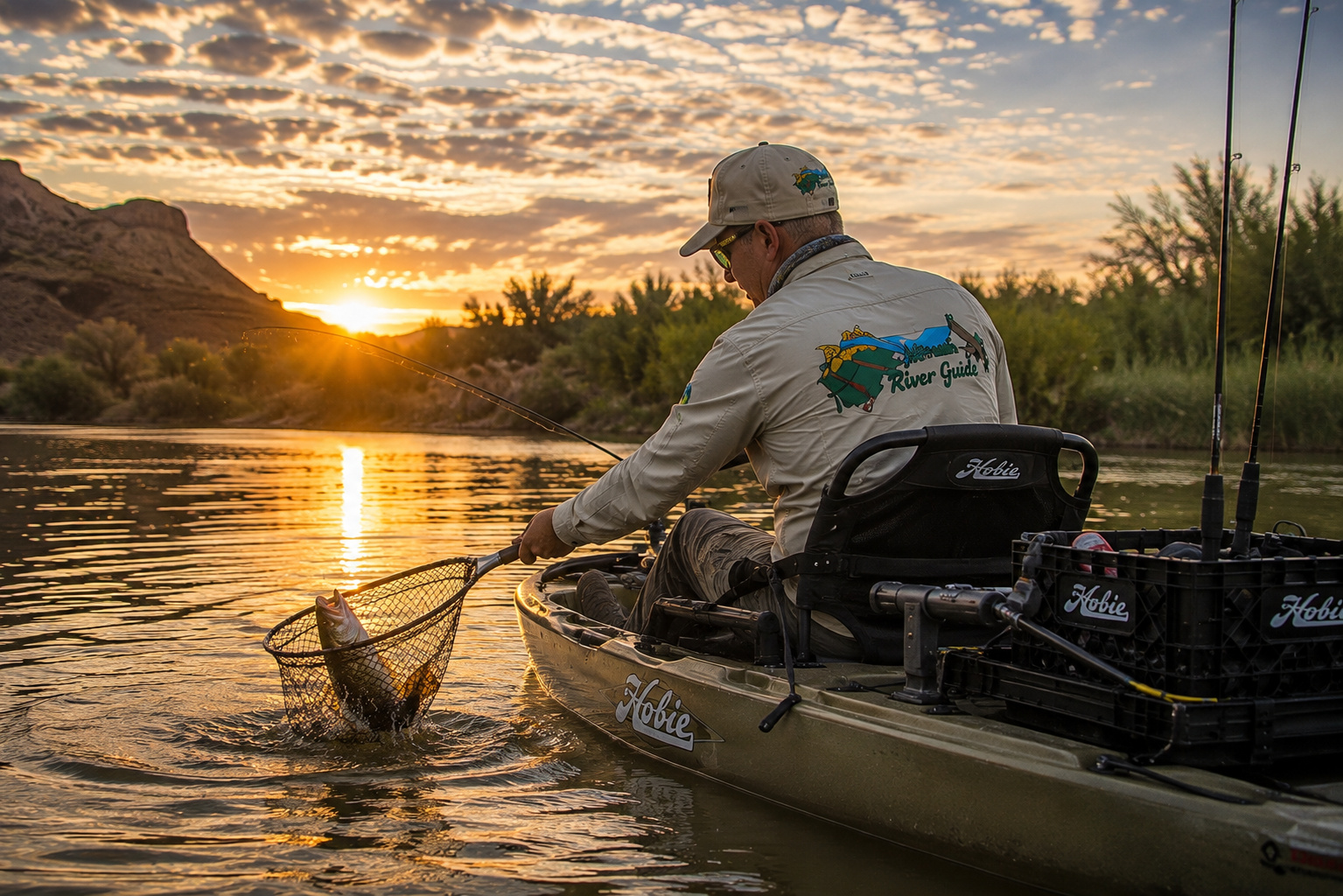
Land the fish efficiently.
Wet my hands.
Don't lay it on hot carpet.
Support large bass horizontally when needed.
Have the camera ready before lifting the fish.
Take the photograph.
Return it quickly.
During summer, I'm particularly careful.
Hot water contains less dissolved oxygen, and bass can become stressed quickly.
California's bass tournament program similarly emphasizes keeping bass alive and returning them to the water in good condition. (CalFish & Wildlife)
A trophy bass is worth more swimming than hanging.
Parker Strip Marinas and Boat Access
There is no shortage of river access.
Buckskin Mountain State Park
Buckskin Mountain State Park occupies one of the prettiest sections of the Strip. Arizona State Parks describes it as a riverfront recreation area with camping, beach access, hiking and boating facilities. (Arizona State Parks)
River Island State Park
Just upstream, River Island State Park provides a protected cove, campground and boat-launch access to the Colorado River. During periods when Buckskin's ramp is unavailable, Arizona State Parks directs boaters to River Island about 1.5 miles away. (Arizona State Parks)
Pirate's Den Marina
Pirate's Den Resort & Marina has a three-lane launch ramp, courtesy slips and riverfront facilities at La Paz County Park. (Parker Area Chamber of Commerce)
Parker Dam Area
Additional private resorts, ramps and marina facilities occur along both sides of the river.
One important road note: oversized vehicles and vehicles towing trailers cannot cross Parker Dam. BLM specifically warns visitors about this restriction. (Bureau of Land Management)
That's worth knowing before you arrive at the dam with a bass boat behind you.
Camping Along the Parker Strip
Camping is one of this section's strengths.
Buckskin Mountain State Park offers riverfront camping, hiking and access to the Colorado.
River Island provides a smaller campground and river access.
BLM's Parker Strip Recreation Area includes developed recreation sites such as Crossroads Campground, and numerous private RV resorts line the river. (Bureau of Land Management)
Parker is particularly popular with winter visitors.
I understand why.
A January afternoon beside the Colorado looks awfully good after you've shoveled enough snow.
Boating Safety: Parker Strip Is Not Lake Mohave
This deserves emphasis.
The Parker Strip can carry high-speed boat traffic in a relatively confined river corridor.
That's fundamentally different from running a large reservoir.
Closing speeds become important.
A boat traveling 60 or 70 mph covers distance very quickly.
Add:
Fishing boats on trolling motors.
Personal watercraft.
Water-skiers.
Wake boats.
Pontoon boats.
Swimmers.
Paddlecraft.
Docks.
Narrow sections.
Blind areas.
Changing flows.
And you've created an environment where everybody needs to pay attention.
This is not a place where I put my head down tying a knot while drifting into the channel.
My Parker Strip Safety Rules
I don't care how many years somebody has operated boats. Experience doesn't repeal physics.
On the Strip I:
-
Wear my PFD while underway and use the engine kill switch.
-
Maintain a constant lookout ahead, behind and to both sides.
-
Stay predictable around faster boats and never assume another operator sees me.
-
Slow well before docks, swimmers, paddlecraft, congested areas or uncertain water.
-
Check current river flow and local conditions before launching.
-
Keep navigation lights, throwable flotation, fire extinguisher and signaling equipment aboard and serviceable.
-
Avoid fishing or drifting in the primary navigation path when traffic becomes heavy.
-
Never mix alcohol with operating the boat.
That last one doesn't require much discussion.
Sun, heat, dehydration, vibration and fatigue already degrade reaction time.
I see no reason to volunteer for another handicap.
The river will still be there after the boat is tied up.
High-Speed Traffic Changes How I Fish
There's another practical consideration.
Heavy boat traffic doesn't merely affect safety.
It affects fishing.
Repeated wakes muddy shallow shoreline.
Bass reposition.
Boat control becomes difficult.
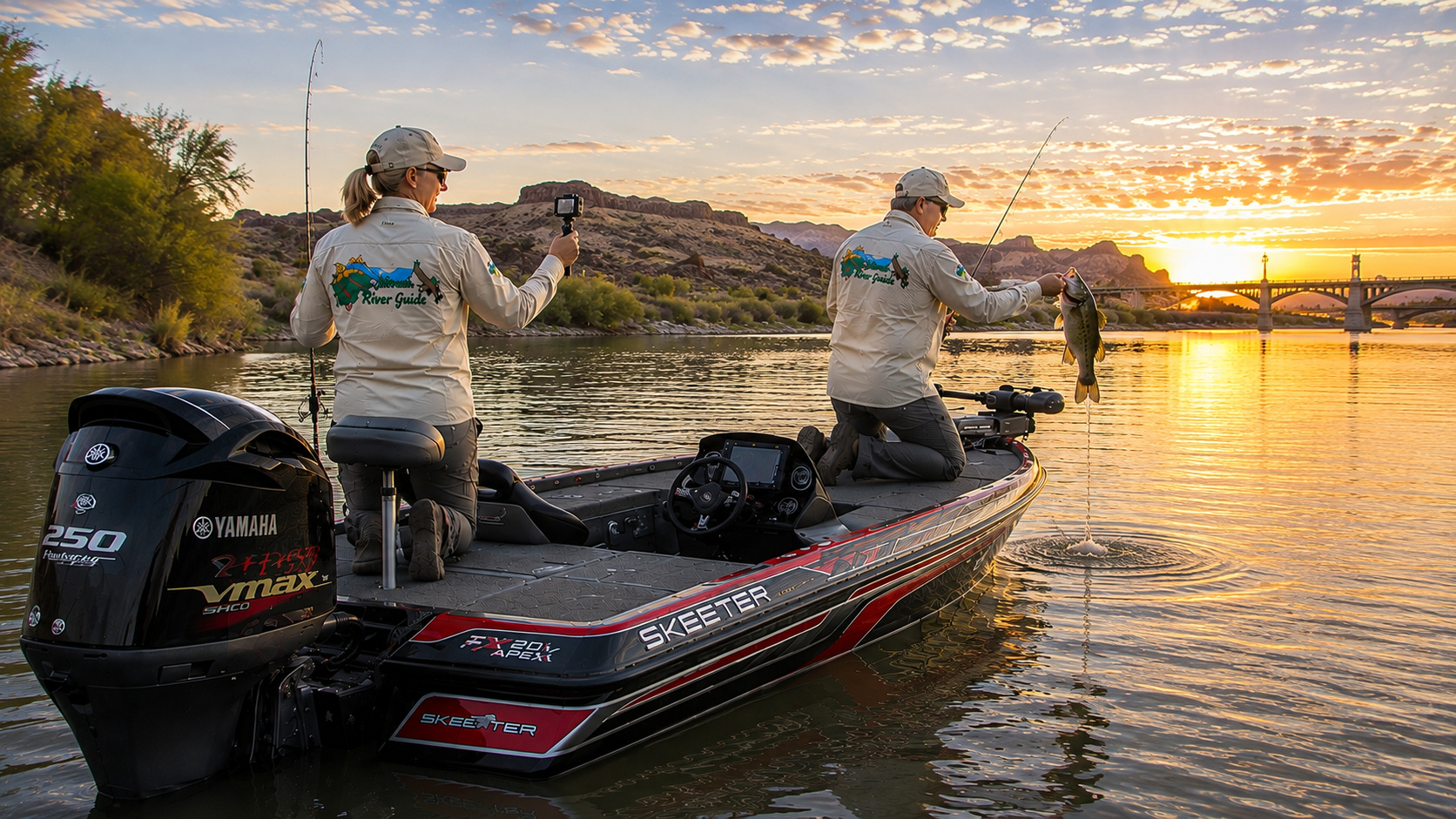
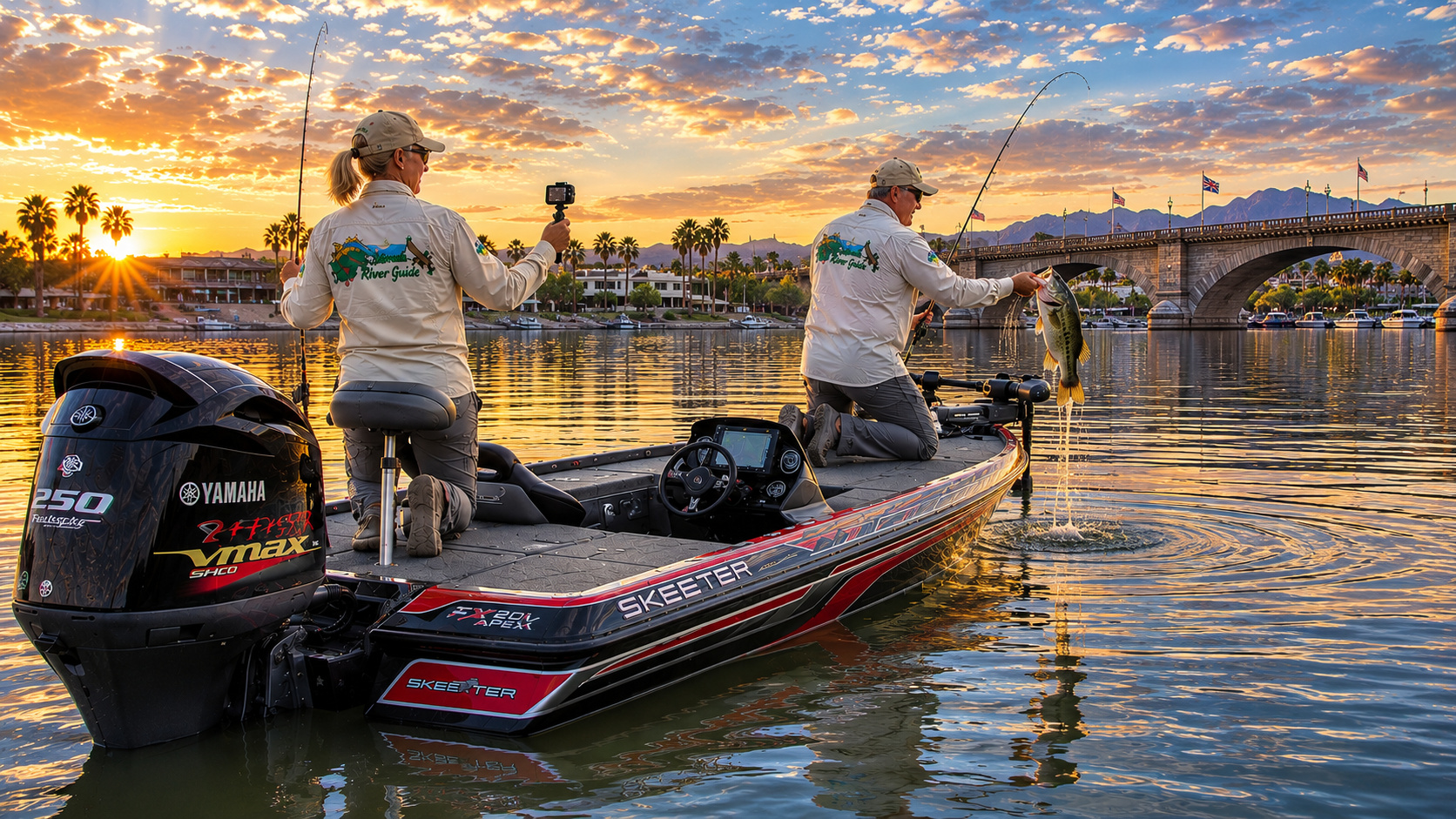
Fishing a delicate drop shot while the Skeeter is rocking like a mechanical bull isn't particularly productive.
So during busy seasons, I fish early.
Very early.
Launch before sunrise.
Fish the prime period.
And when traffic becomes unpleasant, I leave.
I learned a long time ago that stubbornness isn't a fishing technique.
Rafting, Kayaking and Floating the Strip
The Parker Strip isn't a whitewater rafting destination.
It's a recreational river.
Kayaks, paddleboards, rafts and tubes are common, especially during warmer months.
The calm appearance can be deceptive, however.
A paddler sits low on the water and can be difficult for a fast boat to see.
I give paddlecraft enormous room.
If I'm paddling, I make myself conspicuous and avoid high-traffic channels whenever possible.
The river belongs to all of us.
Weather Through the Seasons
Winter
This is Parker at its most civilized.
Mild days.
Cool nights.
Clear desert skies.
Reduced summer boat traffic.
Winter visitors arrive from colder climates.
Bass fishing slows but remains worthwhile.
For Paulette and me, this climate was the revelation that started the entire winter-home search.
Spring
March through May is prime time.
Bass move shallow.
Smallmouth and largemouth spawn.
Desert temperatures are pleasant.
But spring winds can arrive abruptly.
April was the month that sold us on the idea of Arizona winter living.
Summer
Summer is extreme.
Temperatures above 110°F are possible.
Boat traffic can become intense.
Fish at dawn.
Carry abundant drinking water.
Use sun protection.
Know the signs of heat exhaustion.
And remember that aluminum and fiberglass decks get hot enough to punish bare feet and fish alike.
Monsoon
Summer thunderstorms can create sudden wind, lightning and runoff.
A storm doesn't need to be directly overhead to affect a desert river.
Fall
October and November are wonderful.
Temperatures moderate.
Bass become active.
Recreational traffic declines.
Photography improves.
The river seems to exhale after summer.
Getting to the Parker Strip
From Lake Havasu City, Arizona State Route 95 runs south toward Parker.
From Phoenix, Interstate 10 west toward Quartzsite connects with U.S. 95 north toward Parker.
From Southern California, Interstate 10 provides convenient access toward the Colorado River corridor.
From Needles and Interstate 40, Arizona 95 runs south through Lake Havasu City toward Parker.
The Town of Parker is about 45 miles south of Lake Havasu City, about 45 miles north of Blythe and approximately 45 miles from Interstate 10. (Town of Parker)
For the California side, Parker Dam Road provides a scenic alternative.
Just remember:
Don't try crossing Parker Dam with the boat trailer. (Bureau of Land Management)
Five Stops Along Our Colorado River Journey
Readers starting here can begin with my Colorado River from the Rocky Mountain Headwaters to the Gulf of California overview, which follows the river's roughly 1,450-mile journey from alpine Colorado into the desert Southwest.
Farther upstream, my Colorado River Davis Dam and Lake Mohave guide explores the clear reservoir that ultimately became Paulette's and my winter home water.
The Colorado River below Lake Mohave follows the river as it leaves Davis Dam and flows between Bullhead City and Laughlin.
Our Colorado River Jack Smith Park and Needles section picks up the lower river before it enters Topock Gorge.
And the Colorado River London Bridge and Lake Havasu story brings us through the reservoir immediately upstream of Parker Dam.
Those five stops make the Parker Strip feel less like an isolated fishing destination and more like what it really is:
One chapter in an extraordinary river.
The Month in Parker That Changed Our Winters
When I look back on that month in Parker, the fishing isn't actually what I remember most.
I remember looking.
Paulette and I were trying to imagine another version of retirement.
Casa Oso was still home.
The Moreno Valley was still magnificent.
Wheeler Peak hadn't become any less beautiful.
But winter seemed to be getting longer.
Or maybe I was simply becoming less enthusiastic about it.
There comes a point when watching April snow fall outside the window loses some of its romance.
I wanted water.
I wanted the boat.
I wanted bass.
And I wanted sunshine warm enough that I didn't have to drill a hole through anything before fishing.
So we came to Parker.
We rented a place beside the river for a month.
And naturally, I fished.
The Parker Strip was unlike the Texas lakes where I'd spent so much of my life.
This was narrow water.
Moving water.
A river hemmed between desert mountains and crowded with docks, resorts and boats.
I'd put the trolling motor down and work rock.
Current.
A dock.
An eddy.
Another rocky point.
Sometimes a smallmouth would answer.
Other times we'd find largemouth tucked into slower water.
I enjoyed it.
But I also noticed the traffic.
Fast boats could appear quickly.
Weekend activity transformed the river.
Then we'd drive up toward Lake Havasu.
Beautiful lake.
Excellent bass fishing.
But Havasu had its own crowds.
We started asking ourselves whether there might be another option.
That's how we found Lake Mohave.
I still remember the contrast.
After the Parker Strip and Havasu, Mohave seemed enormous and empty.
There were coves where we could fish without another boat nearby.
Gin-clear water.
Rock.
Desert mountains.
Smallmouth.
Largemouth.
Stripers.
Bighorn sheep if we were lucky.
And silence.
That last part mattered more than I realized.
We began looking at property.
Eventually we found a place roughly a mile and a half up the east slope from Katherine Landing at the base of the Black Mountains.
There was an old Western-style ranch gate at the entrance.
That suited us just fine.
Paulette christened it High Chaparral.
I preferred Casa Codorniz because of all the Gambel's quail wandering around the property.
Neither of us won the naming argument.
So the place has two names.
That's marriage.
And every winter morning when I step outside and look toward Lake Mohave, I can trace the whole thing backward.
Elephant Butte's falling water.
April snow at Casa Oso.
A month-long rental in Parker.
Fishing the Parker Strip.
Exploring Lake Havasu.
Finding Lake Mohave.
Finding our winter home.
Sometimes you choose a river.
Sometimes the river chooses your next turn.
The Colorado River did that for us.
And the Parker Strip was the bend where it happened.
0 Comments