There are rivers we cross, rivers we fish, and rivers we photograph.
Then there are rivers that seem to tell the story of the country itself.
For me, the Colorado River belongs in that last category.
At more than eighty years of age, I have been fortunate enough to see a fair portion of the American West. I spent my boyhood on cattle ranches in the Kansas Flint Hills, where the horizon was broad, the work was honest, and a boy learned early that water was never something to take for granted.
Many years later, Paulette and I built our log home high in the mountains at Angel Fire, New Mexico. From our place above the Moreno Valley we could look toward Wheeler Peak, Bobcat Pass and Eagle Nest Lake. We spent seventeen wonderful years there surrounded by elk, deer, forests, mountain weather and the kind of silence that city folks sometimes travel a thousand miles hoping to find.
In 2017 we moved to Santa Fe, where we spend our summers, but when winter starts piling snow against the Sangre de Cristo Mountains, we generally point ourselves toward the warmer country around Lake Mohave, Arizona.
That puts us right back beside the Colorado River.
Perhaps that is one reason this river fascinates me so much.
Follow the Colorado from beginning to end and you travel from snowfields and trout water through ranch country, sandstone canyons, enormous reservoirs and some of the hottest desert on the continent. You pass through landscapes occupied by Native peoples for thousands of years, beneath dams that helped build the modern Southwest, alongside cities that could scarcely exist without the river, and finally into Mexico toward the Gulf of California.
It is approximately 1,450 miles of American geography, history and human determination wrapped around a ribbon of water. The basin covers roughly a quarter-million square miles and provides water relied upon by about 40 million people in the United States and Mexico. (United States Geological Survey)
Come along with me.
We're going to follow the Colorado River from its Rocky Mountain headwaters toward the sea.
Where Does the Colorado River Begin?
The Colorado River begins quietly.
There is no thunderous waterfall announcing the birth of one of America's great rivers. Instead, its beginnings are tucked into the high country of northern Colorado near La Poudre Pass in Rocky Mountain National Park, along the Continental Divide. (USGS Publications)
Snow is the river's savings account.
Winter storms pile snow across the Rocky Mountains, and when spring sunshine begins working on those snowfields, meltwater trickles downhill. Little streams join other little streams. Creeks gather strength.
Eventually there is a river.
It is hard to reconcile that cold mountain water with the broad desert river flowing past Arizona and California more than a thousand miles downstream.
Yet it is the same Colorado.
I've always found something reassuring about mountain streams. Perhaps it goes back to ranch country and knowing instinctively that wherever there is dependable water, life gathers around it.
That remains true from the Colorado's first mile to its last.
A 1,450-Mile Journey Across the American West
From Rocky Mountain National Park, the Colorado River begins working southwest across Colorado.
It passes through mountain valleys and ranch country before reaching communities including Kremmling, Glenwood Springs and Grand Junction. By the time it approaches Utah, tributaries have transformed the modest headwaters stream into a substantial Western river.
Across Utah the scenery changes dramatically.
Green valleys surrender to red sandstone.
The river travels through canyon country near Moab and Canyonlands National Park before entering the great reservoir of Lake Powell.
Below Glen Canyon Dam comes one of the most famous tailwater trout fisheries in America.
Then the Colorado enters Marble Canyon and the Grand Canyon.
Few landscapes on earth demonstrate the patience of moving water more dramatically.
Beyond Grand Canyon the river enters Lake Mead behind Hoover Dam, then continues through Lake Mohave, Lake Havasu and the lower Colorado River country of Arizona and California.
Eventually it crosses into Mexico and winds toward its delta and the Gulf of California, also called the Sea of Cortez.
The National Park Service places the river's length at about 1,450 miles and notes that it travels from Rocky Mountain country through the Colorado Plateau and eventually the Sonoran and Mojave desert regions. (National Park Service)
That is an extraordinary change of scenery for one river.
Tributaries: The Rivers That Build the Colorado
No great river travels alone.
The Colorado River is assembled piece by piece by hundreds of creeks and tributaries draining mountains, plateaus and deserts.
Among its important tributaries are the:
-
Green River
-
Gunnison River
-
Yampa River
-
White River
-
Dolores River
-
San Juan River
-
Little Colorado River
-
Virgin River
-
Bill Williams River
-
Gila River
-
Salt River
In the upper basin alone, important Colorado tributaries include the Blue, Eagle, Roaring Fork, Gunnison and Uncompahgre rivers. (USGS Publications)
The Green River deserves special attention. Rising in Wyoming and flowing through Utah, it is the largest tributary of the Colorado. The Green meets the Colorado in Canyonlands National Park, and standing above that country gives a fellow some appreciation for how enormous this watershed really is.
The San Juan brings water from Colorado, New Mexico and Utah.
The Gunnison drains substantial mountain country in western Colorado.
Farther south, desert tributaries such as the Little Colorado, Virgin, Bill Williams and Gila add their own character to the system.
Each carries more than water. They transport sediment, nutrients and organic material and create habitat that influences the ecology of the main river. (United States Geological Survey)
The Great Lakes of the Colorado River System
Modern Americans didn't simply live beside the Colorado.
We dammed it.
Few rivers anywhere have been engineered as extensively.
The Colorado River system contains some of America's best-known reservoirs, including:
Lake Granby in Colorado
Lake Powell in Utah and Arizona
Lake Mead in Nevada and Arizona
Lake Mohave in Nevada and Arizona
Lake Havasu in Arizona and California
The broader basin also includes major tributary reservoirs such as Flaming Gorge Reservoir, Navajo Reservoir and Blue Mesa Reservoir.
Lake Powell and Lake Mead dominate the storage system. Together they account for most of the major reservoir storage capacity in the basin. (USGS Publications)
Each has developed its own personality.
Lake Powell is red-rock canyon country flooded blue.
Lake Mead is enormous desert water surrounded by rugged mountains.
Lake Mohave is long, narrow and remarkably clear.
Lake Havasu combines fishing and boating with one of the Southwest's most recognizable landmarks, London Bridge.
Paulette and I know Lake Mohave especially well from our winter months in Arizona. There is something almost improbable about looking across that blue-green water surrounded by desert mountains.
Readers interested in exploring that portion of the river can continue with my Colorado River Davis Dam and Lake Mohave guide.
Colorado River Water Levels: A River Under Pressure
Any honest discussion of the modern Colorado River must include water levels.
This is no longer a subject we can tuck into the final paragraph.
The Colorado is under enormous pressure.
Rising temperatures have changed snowmelt and streamflow patterns, while prolonged drought and enormous human demand have reduced reservoir storage. The river supplies water to tens of millions of people while supporting millions of acres of agriculture. (United States Geological Survey)
Conditions in 2026 are particularly sobering.
The Bureau of Reclamation described the spring runoff as exceptionally poor, associated with record-low snowpack along with unusually warm and dry conditions. Its 2026 drought-response plan called for substantial releases from Flaming Gorge Reservoir to support the Colorado River system. (USBureau of Reclamation)
In early August 2026, Lake Powell stood near elevation 3,522 feet with roughly 5.4 million acre-feet in storage. Lake Mead was around elevation 1,041 feet in early August and had been declining through July. These figures are provisional and fluctuate with inflow, releases and water operations. (USBureau of Reclamation)
Flaming Gorge Reservoir, meanwhile, was reported at about 72 percent of live storage capacity on August 4, 2026. (USBureau of Reclamation)
For boaters and anglers, the lesson is straightforward:
Always check current lake elevations, river flows, ramp conditions and dam releases before leaving home.
Yesterday's usable boat ramp may be tomorrow's long walk across mud and rock.
Ancient People and the Colorado River
Long before Hoover Dam, Glen Canyon Dam, jet boats, interstate highways or fishing resorts, human beings lived beside this river.
The relationship goes back thousands of years.
The National Park Service reports archaeological evidence of people living along Colorado River environments as early as approximately 10,000 years ago. (National Park Service)
Native cultures learned where water could be found, where floods deposited fertile soil, where game crossed the river and where crops could grow.
Ancestral Puebloan communities developed throughout portions of the upper and middle basin. Patayan cultures occupied lower river country. Other peoples connected to the Colorado River region include Ute, Paiute, Hopi, Navajo, Mojave, Chemehuevi, Quechan, Cocopah, Havasupai and Hualapai peoples, among others. (National Park Service)
They weren't merely passing through.
The river was home.
Water meant food, transportation, agriculture, wildlife and survival.
That deserves remembering whenever we call the Colorado a "resource." Long before modern governments divided its water on paper, generations of people understood its value firsthand.
For another look into this heritage, visit The Original Coloradans in the Colorado River Guide archive. (Colorado River Guide)
Recreation Along the Colorado River
Few waterways offer such an astonishing variety of outdoor recreation.
Depending upon where you stop along its 1,450 miles, you can enjoy:
rafting, kayaking, canoeing, fishing, boating, camping, hiking, wildlife photography, swimming, paddleboarding, off-roading, bird watching and sightseeing.
The upper Colorado offers mountain rafting and float fishing.
Utah provides spectacular red-rock canyon floats.
Grand Canyon delivers legendary multi-day whitewater expeditions.
Lake Mead, Lake Mohave and Lake Havasu become major powerboat and fishing destinations.
Below the dams, long stretches of river provide excellent kayaking and fishing.
At Davis Camp near Bullhead City, for example, visitors have access to beaches, camping, RV facilities, boating and fishing right along the Colorado River. My more detailed Colorado River Davis Camp Bullhead City guide provides a closer look at that section.
Boating the Colorado River
I have spent enough years around boats to respect what moving water can do.
The Colorado can look gentle while carrying tremendous force.
Upstream, boaters must consider spring runoff, rocks, rapids, cold water and changing flows.
Reservoir boaters face a different set of problems: submerged rock formations, rapidly changing weather, wind and long distances between protected coves.
Desert winds deserve particular respect.
Lake Mead, Lake Mohave and Lake Powell can change character surprisingly quickly when afternoon winds arrive.
Always carry approved personal flotation devices, adequate fuel, drinking water, navigation equipment, sun protection and emergency communications.
File a float plan whenever you're heading into remote country.
And remember one old rule that has kept plenty of boaters out of trouble:
The river doesn't care how experienced you are.
Treat it accordingly.
Fishing the Colorado River
Now we're getting to a subject close to my heart.
The Colorado is not one fishery.
It is dozens of fisheries connected by one river.
High in Colorado, cold water supports trout.
Farther downstream, warmer reservoirs and river sections support bass, stripers, catfish and other warmwater species.
The river may provide opportunities for:
Rainbow trout
Brown trout
Cutthroat trout
Smallmouth bass
Largemouth bass
Striped bass
Channel catfish
Flathead catfish
Carp
Crappie
Bluegill and sunfish
Native fishes also inhabit the Colorado system, including several highly specialized species adapted to the river's historic flow conditions. Some are protected, so anglers need to know current identification and fishing regulations for the state and stretch of water they're fishing.
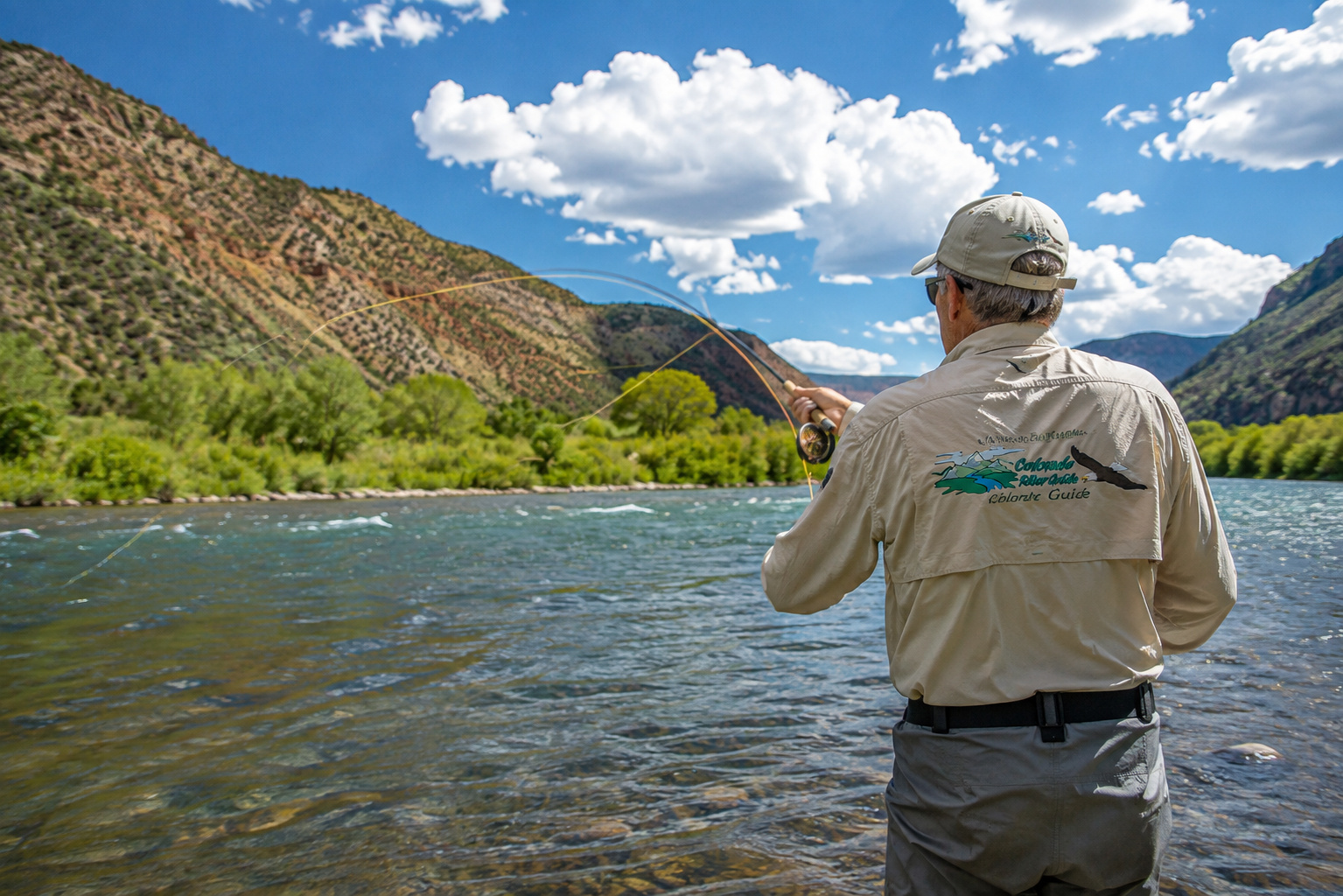
For anglers interested specifically in moving water and trout, my Fly Fishing the Colorado River guide goes into considerably more detail.
Fishing Rods and Reels for the Colorado River
There isn't one perfect Colorado River outfit.
I would match the tackle to the section.
Trout
For conventional spinning tackle, a 6½- to 7-foot light or medium-light spinning rod paired with a quality 2000- or 2500-size spinning reel makes a versatile outfit.
Use approximately 4- to 8-pound monofilament or fluorocarbon depending upon water clarity, fish size and cover.
Fly anglers will find a 9-foot 5-weight hard to beat for general trout fishing.
A 4-weight works nicely for smaller upper-river water, while a 6-weight provides additional muscle for wind, larger streamers and bigger fish.
Smallmouth and Largemouth Bass
I prefer a 6-foot-10-inch to 7-foot-3-inch medium or medium-heavy rod, depending upon the lure.
Spinning tackle works beautifully with finesse presentations.
Baitcasting tackle handles crankbaits, spinnerbaits, jigs and heavier soft plastics.
Six- to 12-pound fluorocarbon works for finesse fishing, while 12- to 17-pound fluorocarbon or heavier braid may be appropriate around cover.
Striped Bass
Stripers require more backbone.
A 7- to 8-foot medium-heavy rod with a strong spinning or baitcasting reel gives an angler a fighting chance when a good Colorado River striper decides he's heading for California and you're standing in Arizona.
Use 15- to 30-pound line depending upon technique and fish size.
Baits and Lures
The river's changing environments demand an equally varied tackle box.
For trout, I like:
small spinners, spoons, marabou jigs, small crankbaits, nightcrawlers where legal, salmon eggs where permitted, and an assortment of flies and nymphs.
Fly anglers should carry patterns including Pheasant Tail Nymphs, Prince Nymphs, Copper Johns, Zebra Midges, Elk Hair Caddis and Parachute Adams.
For bass:
soft-plastic worms, tubes, Ned rigs, drop-shot rigs, jigs, crankbaits, jerkbaits, spinnerbaits and topwaters all deserve room in the boat.
For stripers:
swimbaits, spoons, topwater plugs and live bait where regulations allow can be excellent.
Below Glen Canyon Dam, trout often respond to tiny midges, scuds and nymphs.
On Lake Mohave and Lake Havasu, bass anglers can work rocky points, submerged structure, coves and shoreline transitions.
Topock Gorge is particularly interesting bass country, and readers planning to fish that lower-river stretch may enjoy my article on bass fishing the Colorado River at Topock Gorge and Lake Havasu.
Productive Water Temperatures
Water temperature is one of the most useful pieces of information an angler can collect.
For trout, I generally look for water from roughly the mid-40s through low 60s Fahrenheit, with particularly comfortable feeding conditions often occurring in the 50s.
Once trout water approaches the upper 60s, catch-and-release fishing becomes increasingly stressful. In very warm water, I would rather leave the trout alone.
Smallmouth bass become increasingly active as temperatures move through the 50s and 60s, with excellent fishing commonly occurring through roughly 60 to 75 degrees.
Largemouth bass generally become aggressive from the 60s into the upper 70s.
Striped bass often prefer cooler water and may move vertically through reservoirs following baitfish and suitable temperature and oxygen.
A temperature gauge on the boat is therefore not decoration.
It tells a story.
What Is the Best Time of Day to Fish the Colorado River?
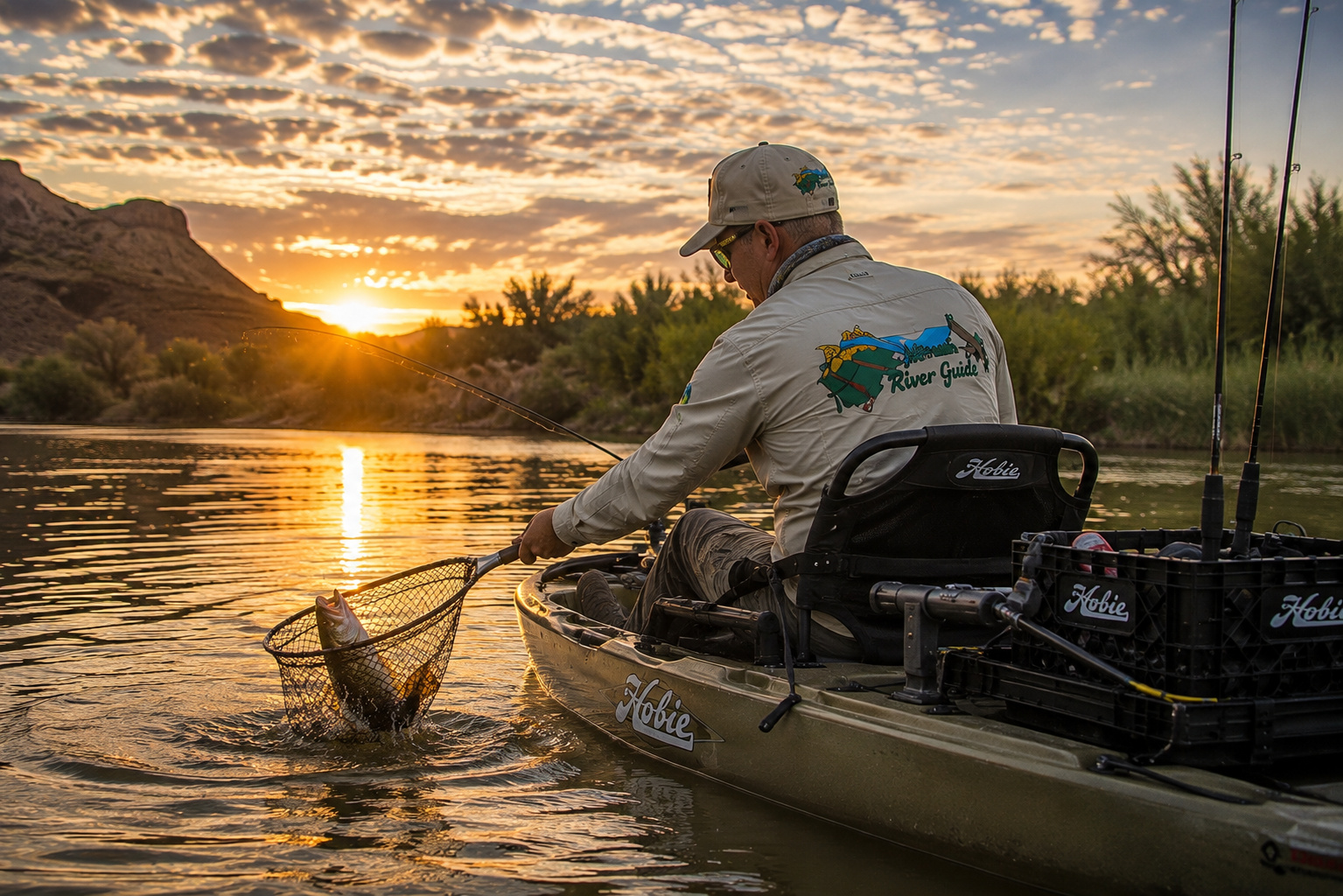
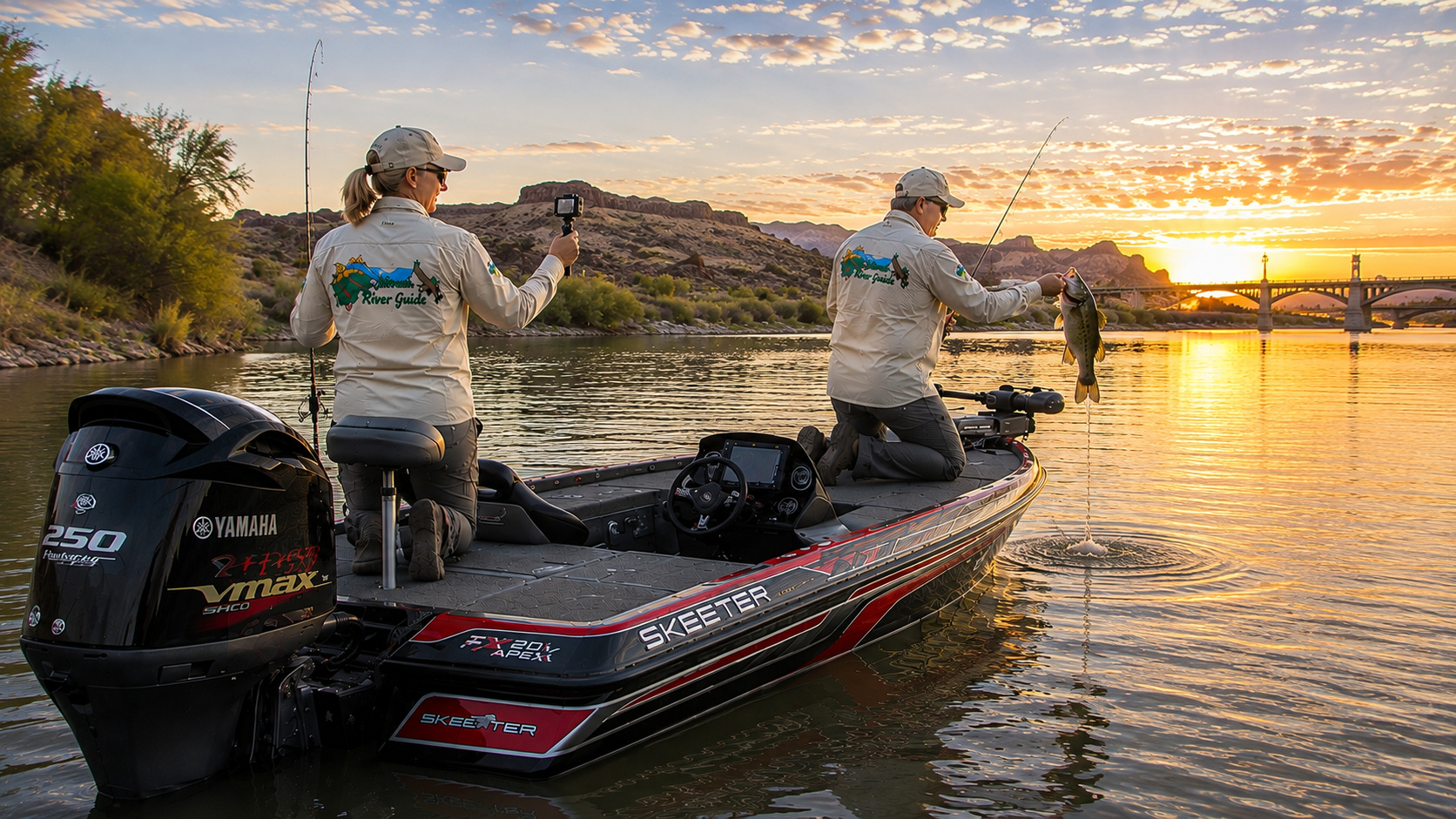
I've always loved sunrise.
Part of that is fishing.
Part is photography.
And part is simply that I have never found many things prettier than first light spilling across Western water.
During summer, dawn and the first few hours after sunrise are often excellent.
Fish may move shallow overnight and remain active before the sun climbs.
Evening provides another feeding period.
In cooler spring and fall weather, midday can be surprisingly productive as sunlight warms shallow water.
Winter trout fishing may actually improve after the morning chill has eased.
Wind, current, insect hatches, dam releases and cloud cover can change all of that.
Fish don't read outdoor magazines.
They have a habit of reminding writers of that fact.
Catch and Release
After a lifetime around fish and fishing, I have become increasingly conscious of how we handle what we catch.
If I'm releasing a fish, I try to:
use barbless or pinched-barb hooks when practical, land the fish promptly, wet my hands before touching it, use a rubberized landing net, keep the fish in the water while removing the hook, avoid squeezing its body, and photograph it quickly.
Large trout and bass deserve particular care.
That fish may have taken many years to grow.
I'd rather watch her kick away and perhaps give another angler the same pleasure someday.
Camping Along the Colorado River
A person could spend years exploring Colorado River camping.
Near the headwaters you'll find mountain campgrounds among pine and spruce.
Utah offers red-rock camping beneath skies so clear the stars almost seem unreasonable.
Lake Powell and Lake Mead provide developed and primitive camping opportunities.
Lake Mohave offers campgrounds around Katherine Landing, Willow Beach and Cottonwood Cove, along with shoreline opportunities where permitted.
The Colorado River Guide's Lake Mohave Over-the-Top Lookout Trail offers another glimpse of the desert landscape surrounding the lake. The site's own account describes the route through the Black Mountain foothills overlooking the Lake Mohave and Bullhead City country. (Colorado River Guide)
Wherever you camp, remember that desert camping requires more water than many visitors expect.
Carry extra.
Then carry some more.
Colorado River Weather Through the Seasons
Few rivers experience a greater range of weather.
Spring
In the Rockies, spring may still look suspiciously like winter.
Snowmelt increases river flows and can make wading dangerous.
Farther south, spring can be nearly perfect, with mild desert temperatures and excellent fishing.
Summer
High-country summer weather is generally pleasant but thunderstorms can develop quickly.
Desert sections are another matter.
Temperatures along the lower Colorado regularly become dangerously hot.
Plan outdoor activity around early mornings, carry abundant drinking water and never underestimate heat.
Fall
If I had to choose one season for exploring the Colorado, fall would be difficult to beat.
Mountain aspens turn gold.
Trout become active.
Desert temperatures moderate.
Crowds begin thinning.
Winter
Snow settles across the headwaters while lower sections around Lake Mohave and Lake Havasu can remain wonderfully mild.
That contrast is precisely why Paulette and I learned to appreciate winter along the lower Colorado.
While snow is falling around Santa Fe, sunshine on Lake Mohave has a persuasive argument of its own.
Wildlife Along the Colorado River
Follow the Colorado long enough and you pass through an extraordinary range of wildlife habitat.
Near its headwaters you may encounter:
elk, mule deer, moose, black bear, coyotes, beaver, marmots, eagles and osprey.
Canyon country adds:
bighorn sheep, mountain lions, bobcats, ravens and numerous reptiles.
Along the lower river I've enjoyed watching desert bighorn sheep and wild burros against those rugged mountains.
Wetlands and riparian areas attract herons, egrets, ducks, geese and countless migrating birds.
As a wildlife photographer, I've learned that rivers are natural gathering places.
Find water in the Southwest and sooner or later something comes to drink.
The trick is being quiet enough to be there when it arrives.
Major Cities and Communities Along the Colorado River Journey
Some communities sit directly on the river while others serve as gateways to it.
Beginning in the upper basin, notable places include:
Grand Lake, Kremmling, Glenwood Springs and Grand Junction in Colorado; Moab in Utah; Page in Arizona; Las Vegas and Boulder City near Lake Mead in Nevada; Laughlin, Nevada and Bullhead City, Arizona along the Lake Mohave corridor; Needles, California; Lake Havasu City, Arizona; Parker, Arizona; and communities farther south approaching the Mexican border.
Each represents a different Colorado River.
Glenwood Springs feels like mountain Colorado.
Moab belongs to red-rock country.
Page is Lake Powell country.
Boulder City carries the history of Hoover Dam.
Laughlin and Bullhead City sit face-to-face across the river.
Lake Havasu City is boating country.
And farther south, agriculture increasingly becomes part of the river's story.
Getting to the Colorado River
Perhaps the best thing about exploring the Colorado is that there isn't one entrance.
There are hundreds.
For the headwaters, Denver provides the major transportation gateway. From there, highways lead into Rocky Mountain National Park and Grand Lake.
Interstate 70 follows portions of Colorado River country across western Colorado, making towns such as Glenwood Springs and Grand Junction particularly accessible.
Interstate 70 also provides access toward Moab and Canyonlands country in Utah.
For Lake Powell and Glen Canyon, Page, Arizona is the principal gateway.
Las Vegas provides convenient access to Hoover Dam and Lake Mead.
U.S. Highway 93 leads south toward Lake Mohave, while Laughlin and Bullhead City provide excellent bases for exploring the river below Davis Dam.
Interstate 40 crosses the Colorado near Needles, California.
Farther south, highways connect Lake Havasu City, Parker, Blythe and Yuma with the lower Colorado River corridor.
My advice is not to hurry.
The Colorado River isn't something to check off a list.
Take the back road.
Stop at the overlook.
Walk down to the water.
Watch a heron fishing the shallows.
Talk with the old fellow launching his boat before daylight.
Those moments are the trip.
The Colorado River and the Gulf of California
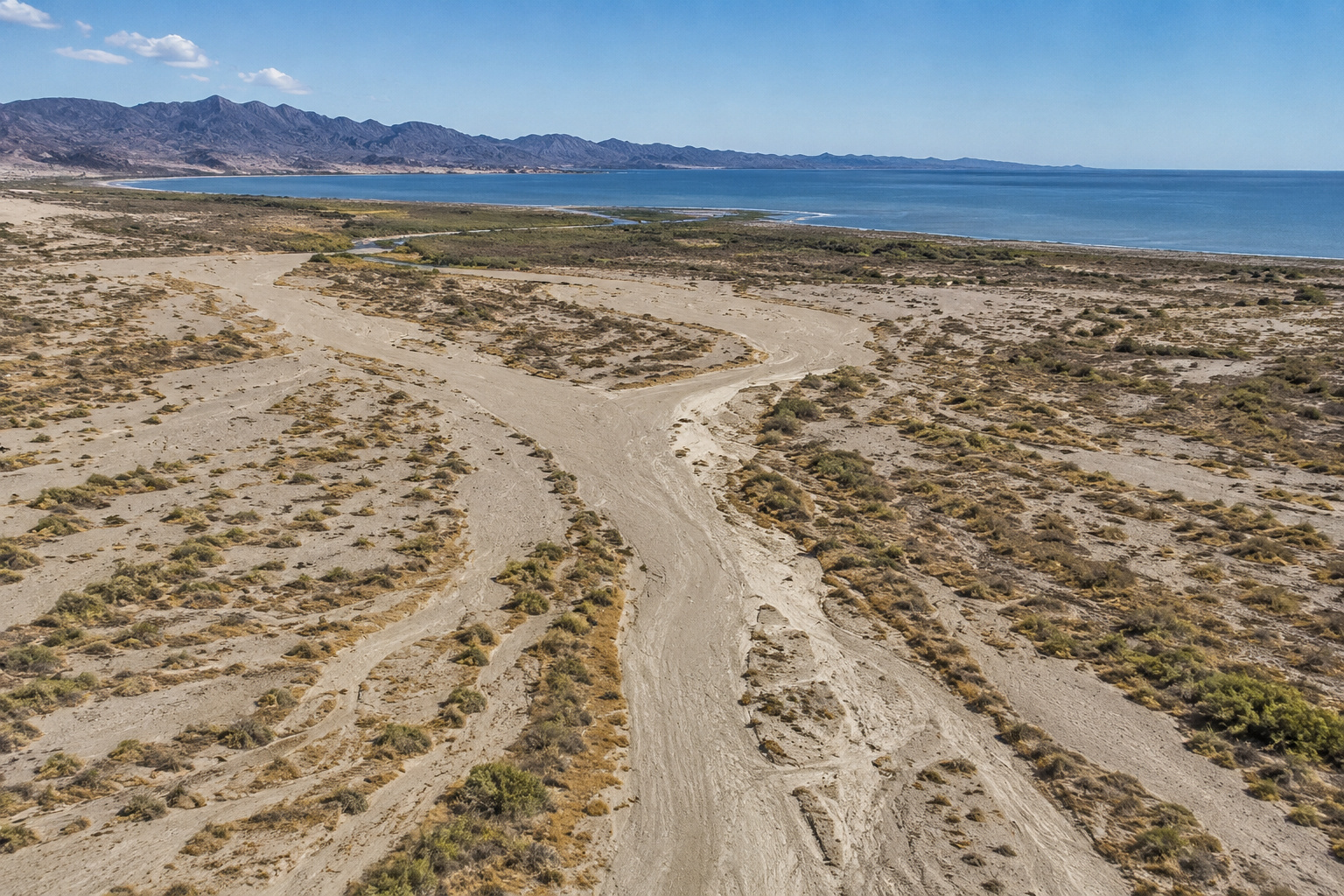
Historically, the Colorado ended in an enormous delta where freshwater mixed with the northern Gulf of California.
Today that ending is far more complicated.
Dams, reservoirs, irrigation systems and municipal diversions remove much of the river's flow before it reaches the sea. The lower Colorado crosses into Mexico, where remaining water travels toward the delta and the Gulf of California.
The river that began as snow beneath the Continental Divide has traveled approximately 1,450 miles.
Think about what it has passed.
Rocky Mountain snowfields.
Ranch country.
The Colorado Plateau.
Canyonlands.
Lake Powell.
Grand Canyon.
Lake Mead.
Hoover Dam.
Lake Mohave.
Lake Havasu.
The Sonoran Desert.
Mexico.
And finally the sea.
One River, an Entire West
When I was a boy in the Kansas Flint Hills, water meant stock ponds, creeks, wells and whether there would be enough grass for cattle.
Later, as an angler, water became something else.
It became the place where anticipation lived.
Then photography taught me another way of seeing it.
A river reflects everything around it: mountains, clouds, cottonwoods, canyon walls and sometimes an old fisherman standing quietly beside it.
The longer I live, the less inclined I am to think of rivers simply as water moving downhill.
The Colorado River is geology in motion.
It is Native history.
It is agriculture.
It is electricity.
It is drinking water.
It is trout rising beneath cottonwoods and smallmouth bass prowling desert reservoirs.
It is rafting through Grand Canyon and sitting beside a campfire after sunset.
It is Lake Mohave turning jade green beneath Arizona sunshine.
And it is a warning.
A river powerful enough to carve Grand Canyon can still be asked to give more water than nature supplies.
Those of us who fish it, boat it, photograph it or simply stand beside it have inherited something remarkable.
We also inherited the responsibility to leave some of it for the people who haven't arrived yet.
Someday, perhaps many years from now, another old fisherman may stand beside the Colorado at sunrise with a camera around his neck and a fishing rod leaning against a cottonwood.
I'd like him to see a river worth remembering.
0 Comments